A Blank Living Room Wall Doesn’t Need More Art — It Needs This
Okay, real talk. You have that one wall. You know the one. You’ve walked past it approximately ten thousand times. You’ve pinned things for it, measured it, held up a frame or two, changed your mind, and put it back. And somehow, months later, it’s still just… a wall.
Here’s what I want to say before we get into anything else: that wall might not be the problem. The problem might be that you’re trying to solve it the wrong way — by adding something, when the room might actually need you to do something else first.
At Bluvelle, we call it the blank wall audit. Three honest questions before anything goes up. And once you ask them, most blank walls stop being problems entirely.
But first — here’s the thing nobody’s actually saying.
Why Blank Living Room Walls Aren’t Actually the Problem
Most blank wall advice rushes straight to solutions. Mirror, floating shelves, gallery wall, oversized art. All fine ideas. But none of them ask the question that actually matters first: does this wall need anything at all?
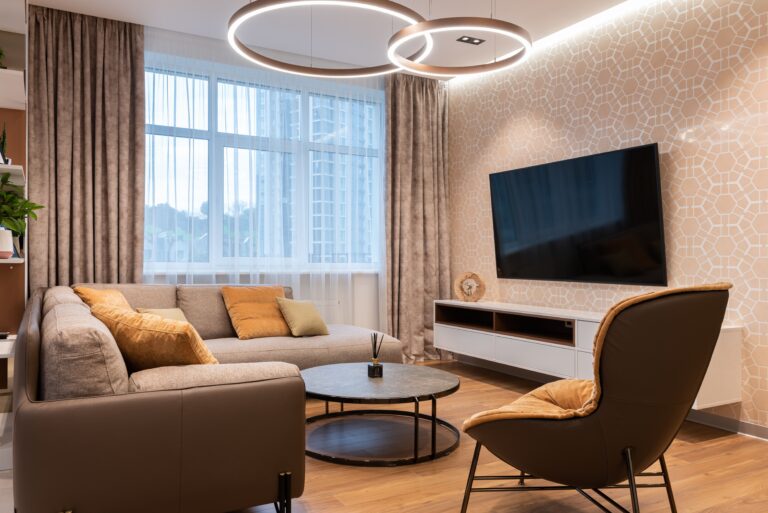
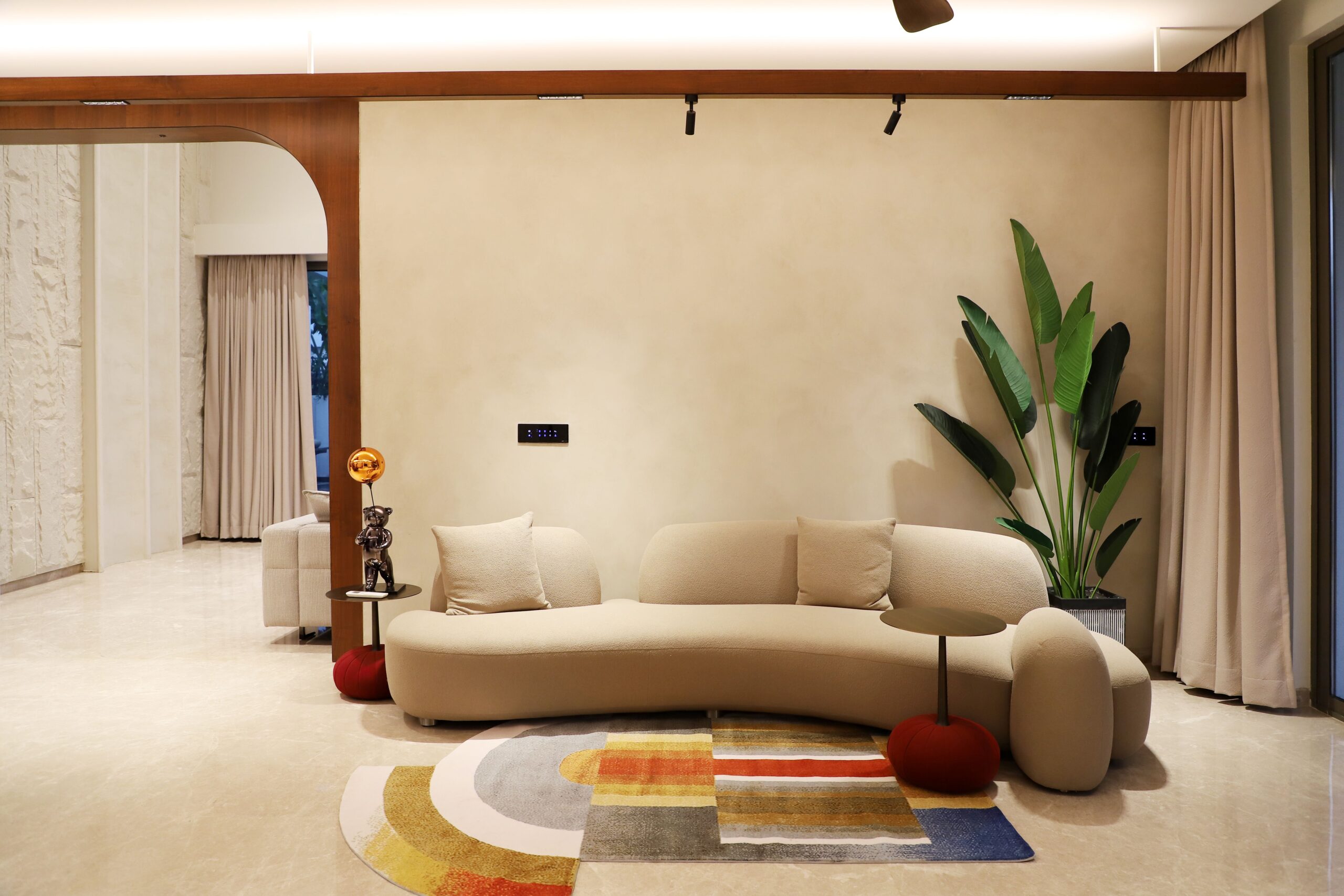
Designer Amanda Shields puts it plainly: create a strong focal point on one or two walls and deliberately leave the others bare. The empty wall isn’t a design failure. It’s the contrast that makes the decorated wall work. Without that breathing room, every wall competes for attention simultaneously — and nothing lands.
Your brain scans every room you walk into, looking for a visual hierarchy. Something to land on. Something that says “this is the point.” When it can’t find one, it keeps scanning — and that restless, slightly unsatisfied feeling is what makes a room feel “off.”
The blank wall gets the blame. But the real issue is usually the absence of one clear focal point — so the eye keeps moving, finds nothing to rest on, and lands on the emptiest wall as the obvious problem.
Fix the focal point, and the blank wall often stops being one.
Why Too Much Wall Decor Makes a Living Room Feel Cluttered
This is the experience most people have but almost nobody names directly — and one of the things we talk about most at Bluvelle.
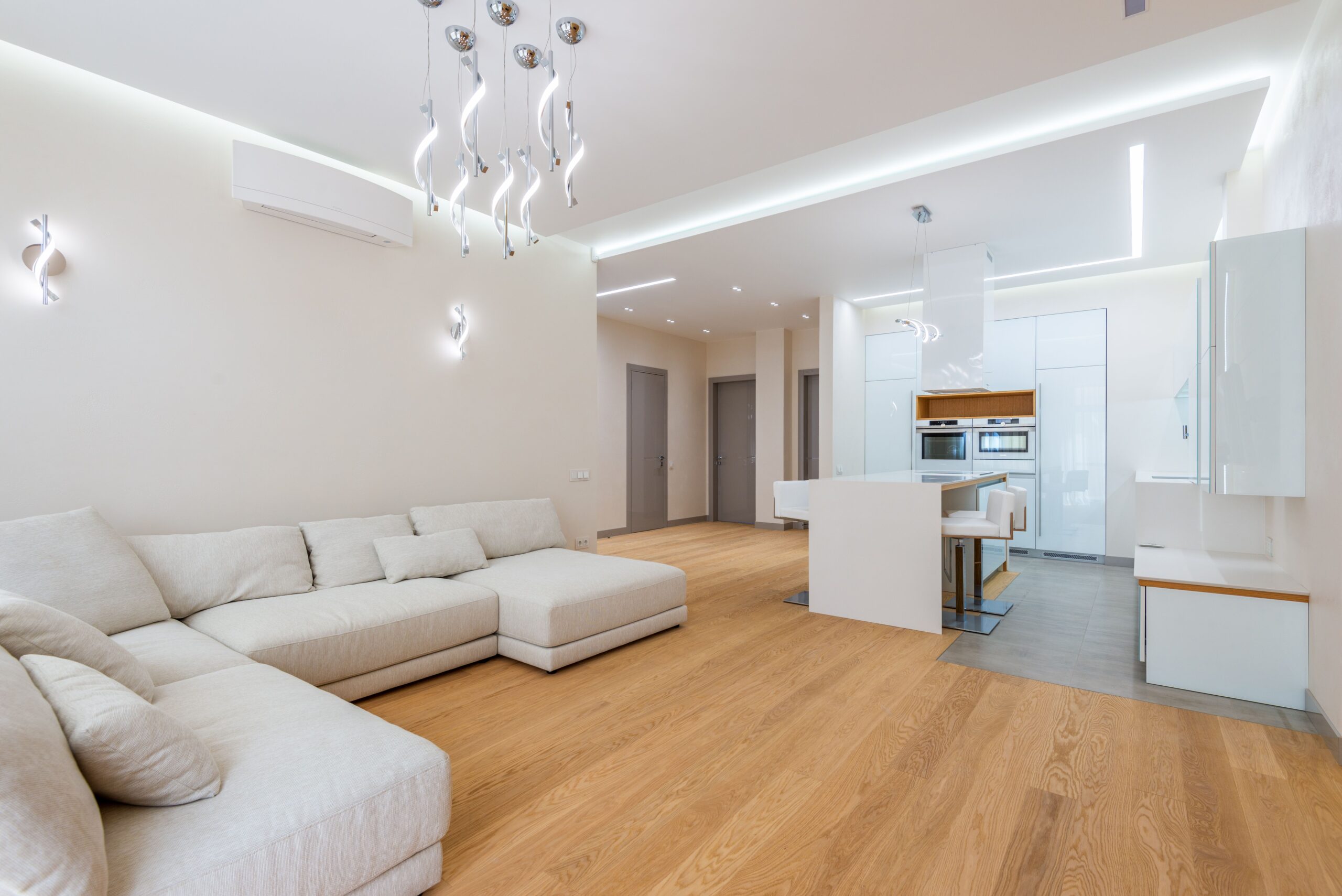
You’ve probably walked into a room where every wall had something on it. Frames here, a gallery there, a shelf with things on it, a print beside something else that seemed to match. And when you stood in the middle of that room, you didn’t feel impressed. You felt vaguely tired. Like you’d been in a conversation with too many people talking at once.
That’s visual noise. When walls are crowded with multiple pieces all demanding attention, your eye rushes over them instead of resting on any one of them.
Pause for a second. Glance at your living room wall right now. Does your eye rest anywhere — or does it rush?
Resting is what you want. Rushing is visual stress — too many competing inputs, no satisfying place to land. Interior design consultant Mae Osz describes it precisely: crowded walls cancel each other out. The wall stops being something you look at and becomes something you look past.
Designer Brenda Petrunick adds something worth sitting with: walls are just one plane in a room full of elements already vying for your eye’s attention — furniture, color, pattern, texture. When you add more to the walls, you’re adding to a competition that’s already crowded. Every item asks to be looked at. At some point the room simply cannot absorb any more, and it tips into overwhelm.
One large piece surrounded by breathing room will always carry more impact than five smaller pieces crowding the same wall. Not because it’s more beautiful on its own — but because the empty space around it amplifies its presence. The silence does as much work as the piece itself.
Continue Reading
15 Small Living Room Ideas That Actually Work (No Renovation Required)
The Bluvelle Blank Wall Audit — Three Questions First
Before anything goes up, ask these:
1:- Is this wall less than 24 inches wide?
Between a door frame, beside a window, flanking a fireplace — leave it alone. Interior designer Dana Feagles has a practical rule: walls under 24 inches of clear space rarely benefit from anything on them. They’re visual connectors, not display surfaces. Anything placed there competes with what’s beside it and usually loses.
2:- Is this wall catching natural light?
A blank wall near a window is already doing something — catching morning light, making soft shadows in the afternoon, shifting the mood of the room through the day in ways a covered wall never can. Natural light on a clean surface is a design element, not an absence of one.
Stand near your window for a moment. Watch what the light does to your empty wall at different times of day. You might decide it doesn’t need anything after all.
3:- Do you need this wall to work, or just look good?
A wall that needs to function — store things, display things, anchor the room — needs a different solution than one that just feels a little naked. Most people try to solve a “needs to work” wall with a “just looks good” answer. That’s why the frame they hung feels wrong six months later.
If all three questions still point toward adding something, here’s what actually moves the needle.
One Thing. Not Five.
This is the principle we return to at Bluvelle more than almost any other — and it’s the reason most walls feel unresolved even after people decorate them.
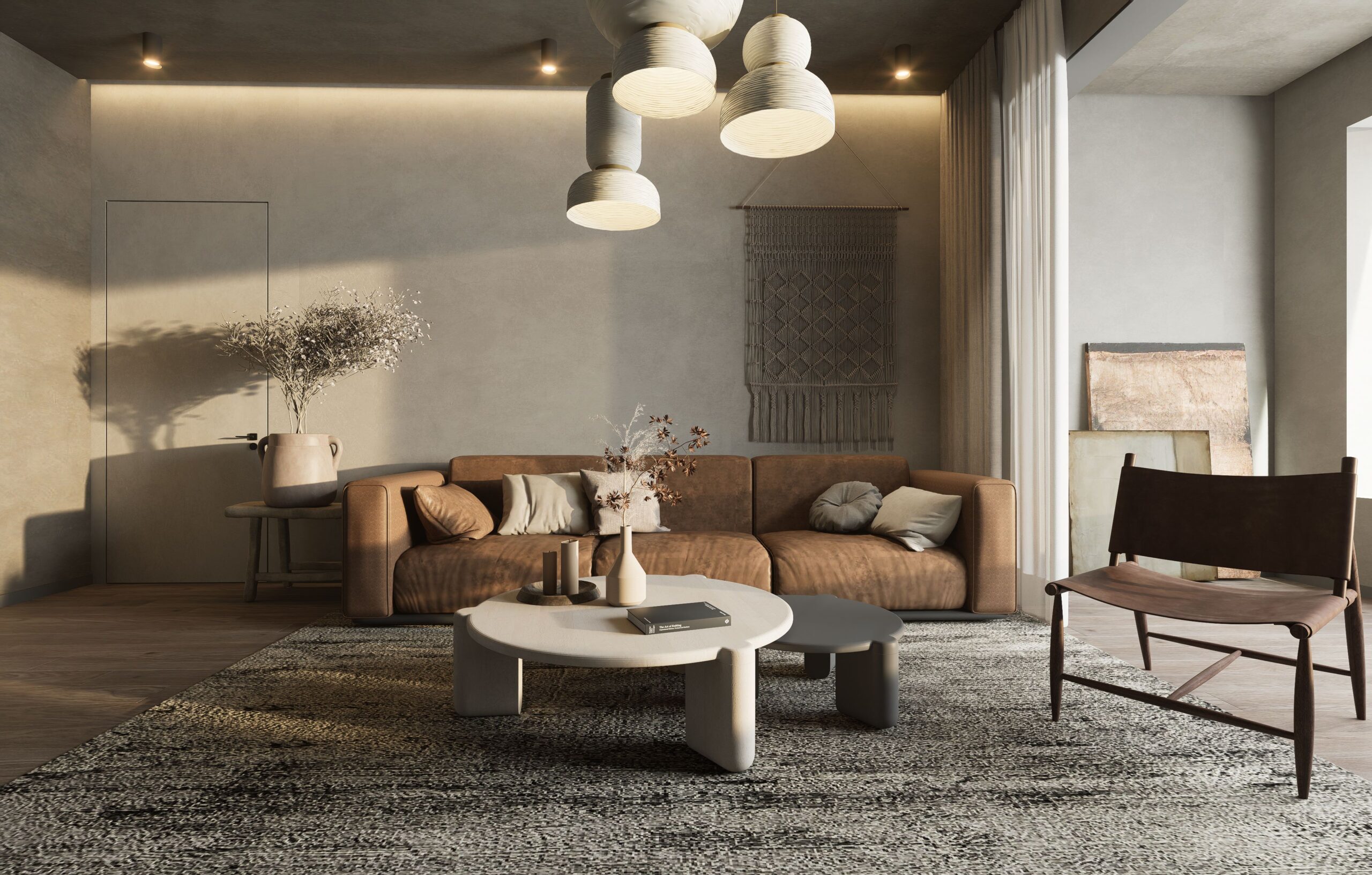
If the wall still wants something after the audit, the answer is almost always one thing. Large enough to hold the wall on its own. Surrounded by enough breathing room that it feels chosen rather than squeezed in. The moment you think “and then I could add…” — stop. That instinct is what fills walls with things that individually looked fine in the store and collectively look like a wall that couldn’t make up its mind.
One oversized sketch with real white space around it. One sconce that doubles as sculpture. One mirror that earns the whole wall by itself.
A practical rule: whatever you hang above a sofa should be roughly two-thirds the width of the sofa itself — not the wall, the sofa — with the bottom edge sitting 6 to 8 inches above the back cushions. Any higher and it loses its connection to the furniture and starts to float. That floating is usually what makes a well-chosen piece still feel slightly wrong.
A Large Mirror — The One Thing That Puts the Room on the Wall
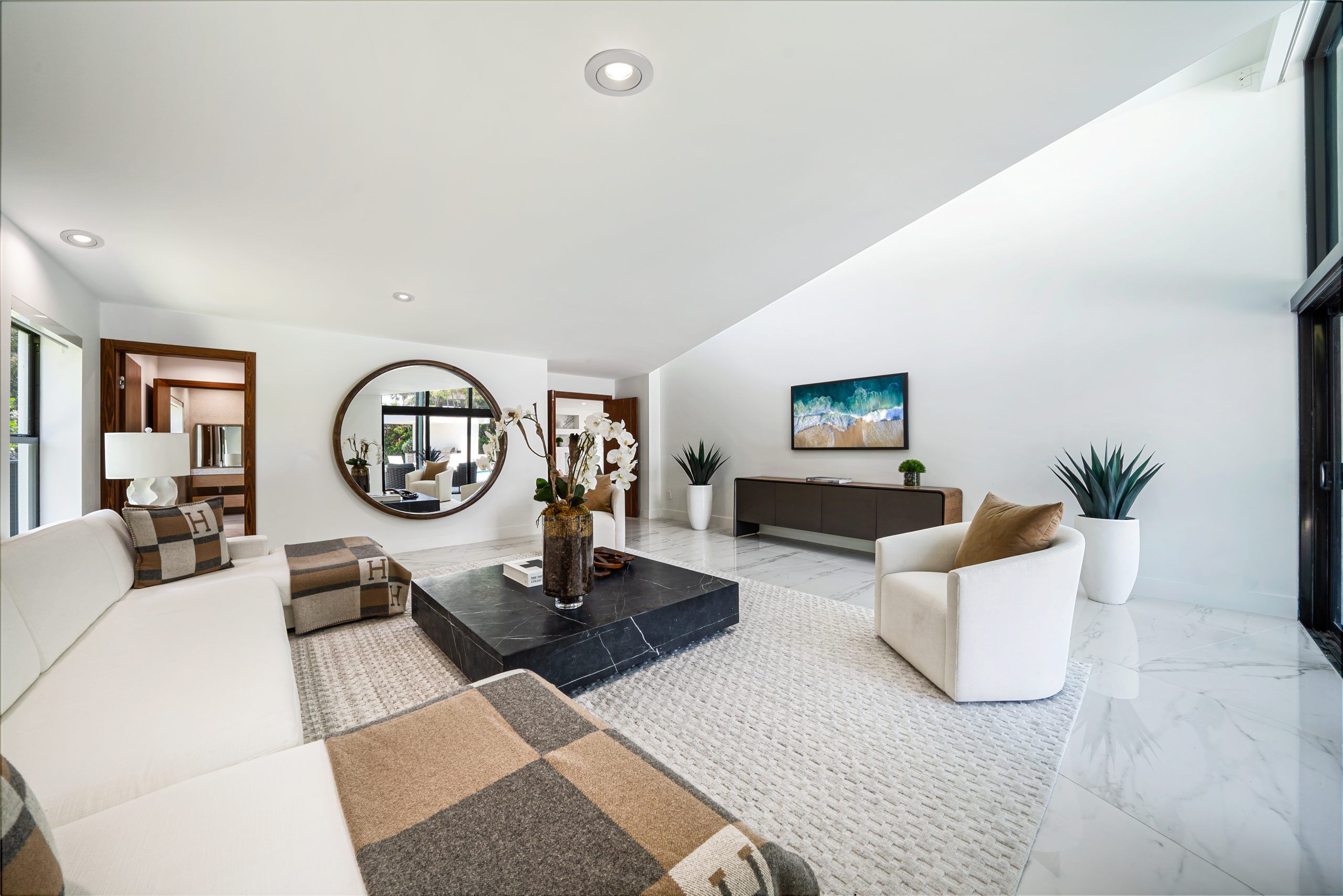
A mirror does something art can’t: it puts the room itself on the wall. The light, the people, the movement — all of it becomes part of what you see. Interior designer Lisa Price describes it as the one solution that “reflects the outside in, capturing light, greenery, and movement, and adding its own layer of beauty” — without competing with anything else in the room.
Go bigger than feels comfortable. A mirror that’s too small looks like an afterthought. One that fills the wall confidently looks like a decision. Place it where it reflects something worth seeing — a window, a lamp, a plant — not the back of a sofa or an empty hallway.
Paint Instead of Wall Art? When Color Works Better
A single coat of color on one wall signals something art rarely can: that the emptiness was a choice, not an oversight. The wall doesn’t become a focal point because something is hanging on it. It becomes one because it was decided.
For renters, peel-and-stick wallpaper from Target or Amazon now comes in genuinely good-looking options, removes cleanly, and costs a fraction of what a frame and print would. It’s worth knowing that exists before spending $200 on art you’re not sure about.
What Works Better Than Art on Most Blank Walls — Sconces
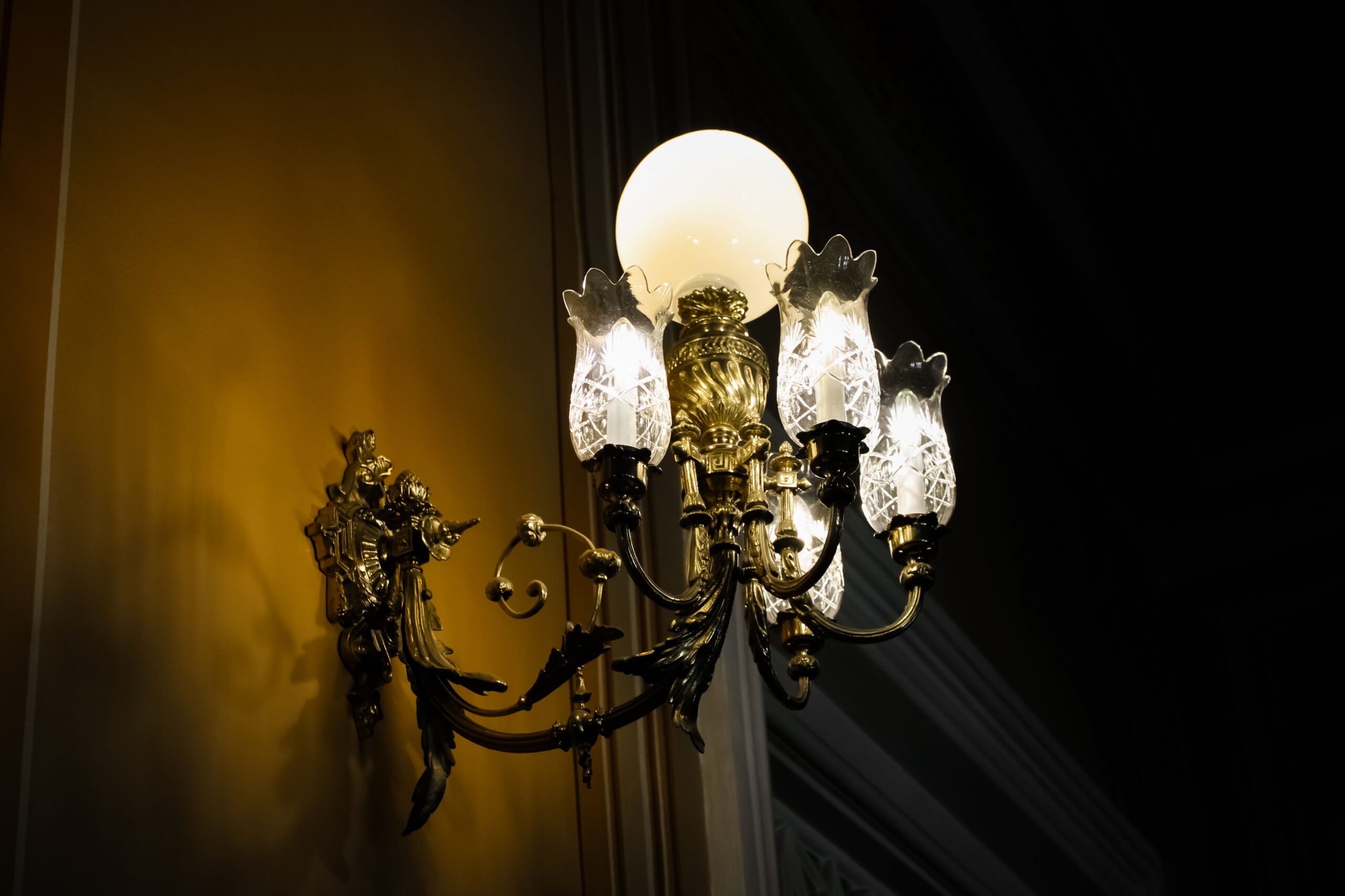
Wall sconces are probably the most underused blank wall solution there is, and one of the most recommended at Bluvelle — because they do two things at once. They add presence to an empty wall, and they fix the lighting at the same time.
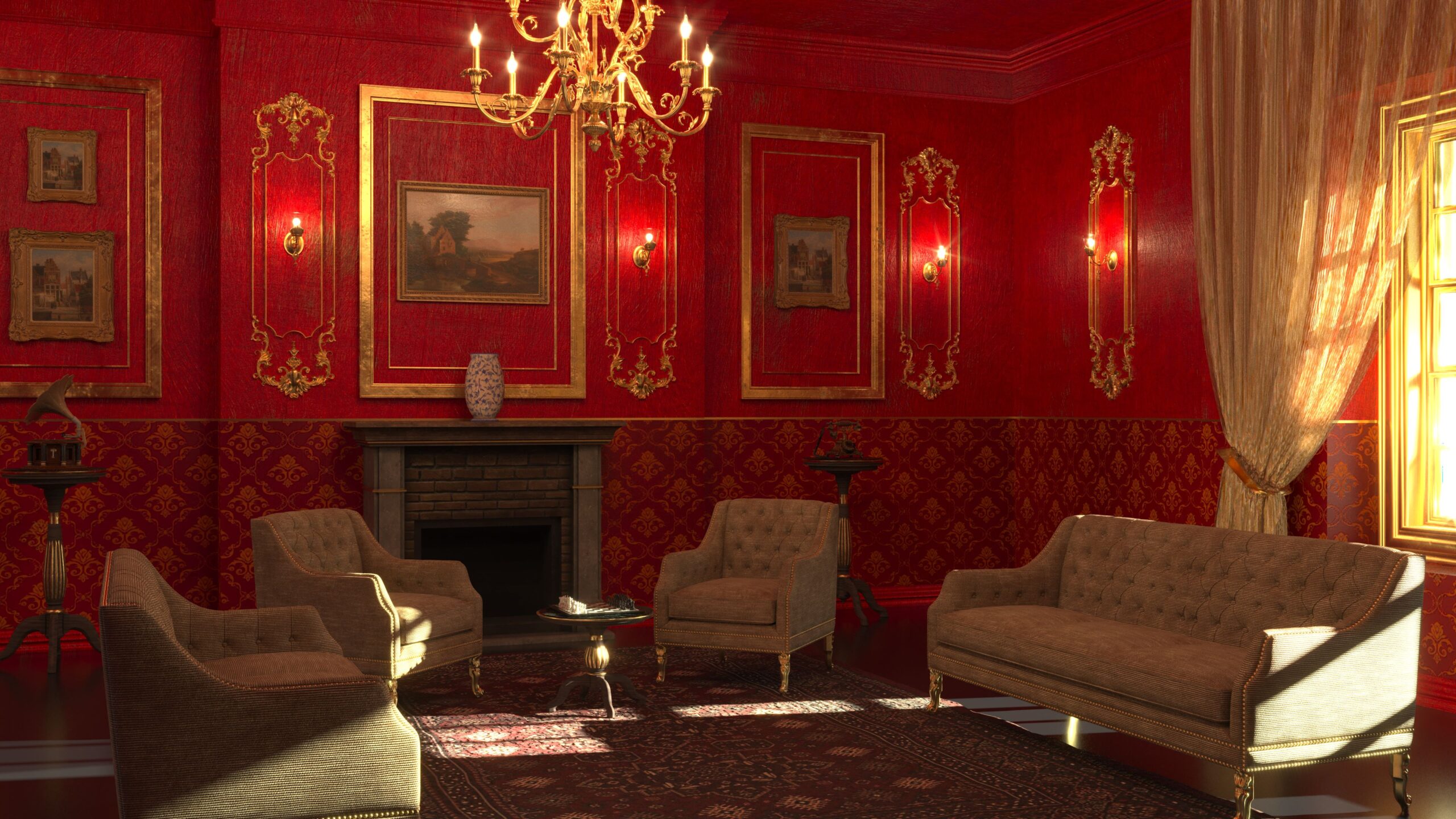
Lisa Price calls sconces “jewelry for a room — they add warmth and that quiet glow that makes a room feel finished.” A pair of plug-in sconces (no wiring, no contractor needed) on an empty wall might be the single change that makes the whole room feel different at night — not because the wall looks better, but because the room finally has the right light.
Continue Reading
Why Your Bedroom Never Feels Relaxing?
Try This Before You Put Anything Else up
Here’s what we’d actually suggest doing first, before any of the above: if you have things on the wall already and they’re not working, take everything down. Live with bare walls for three days.
The About Wall Art team, who’ve been studying how people interact with their walls for years, recommend this exact exercise. In their experience, a room stripped back to bare walls almost always feels immediately calmer. And when something is reintroduced after that pause, it goes up with intention rather than desperation. You stop asking “what should I put here?” and start noticing what the wall actually needs.
Take one thing off your wall today. Just one. Live with that gap for a few days and see what you notice.
Subtraction before addition. Less decided on purpose always reads better than more accumulated by default. That’s not just a decorating preference — it’s the closest thing to a design principle we hold at Bluvelle.
Maybe the wall was never asking for another frame.
Maybe it was asking for permission to stay empty.
And sometimes, that’s exactly what makes a room finally feel finished.