“Why Every Beautiful Living Room Has Something Alive In It — And How Biophilic Design Explains It”
Have you ever walked into a room and felt your shoulders drop before you’d even sat down? Not because it was tidy, not because it was expensive — just because something about it felt calm in a way you couldn’t immediately name?
That feeling has a name. It’s called biophilia. And once you understand it, you’ll start seeing it everywhere.
Biologist E.O. Wilson was the first to put a word to something most of us already felt: human beings have an innate, biological need to connect with nature. Not a preference. A need — as real as food or shelter. We spent hundreds of thousands of years outside, surrounded by wood and stone and light that moved through the day. Then we moved indoors. Into rooms full of synthetic materials, flat surfaces, and light that never changes. And something in us has been quietly missing ever since.
At Bluvelle, we call it the “alive test.” Walk into your living room and ask honestly: is there anything in here that grows, breathes, ages, or changes? If the answer is no, that might be exactly why the room never quite feels finished.
Here’s how to fix it — one honest element at a time.
First, the thing nobody tells you
Most biophilic design advice stops at “add a plant.” And while plants matter, a room with twelve plants on synthetic flooring, under artificial light, surrounded by laminate furniture, is not a biophilic room. It’s just a room with plants in it.
The real work happens in the materials. Wood that shows its grain. Stone that carries the memory of how it was formed. Linen that gets softer every time you use it. These surfaces do something a synthetic room simply cannot — they age, they vary, they feel honest. And a 2025 neuropsychological study confirmed what most of us already sensed: exposure to genuinely natural spaces measurably reduces cognitive overload. Less visual noise. Less tension you can’t name. More of that shoulder-dropping feeling.
Surfaces that show how they were made feel calming. That’s the whole idea.
Continue Reading
Why Your Bathroom Never Feels Like a Spa?
Plants — one good one beats eight small ones
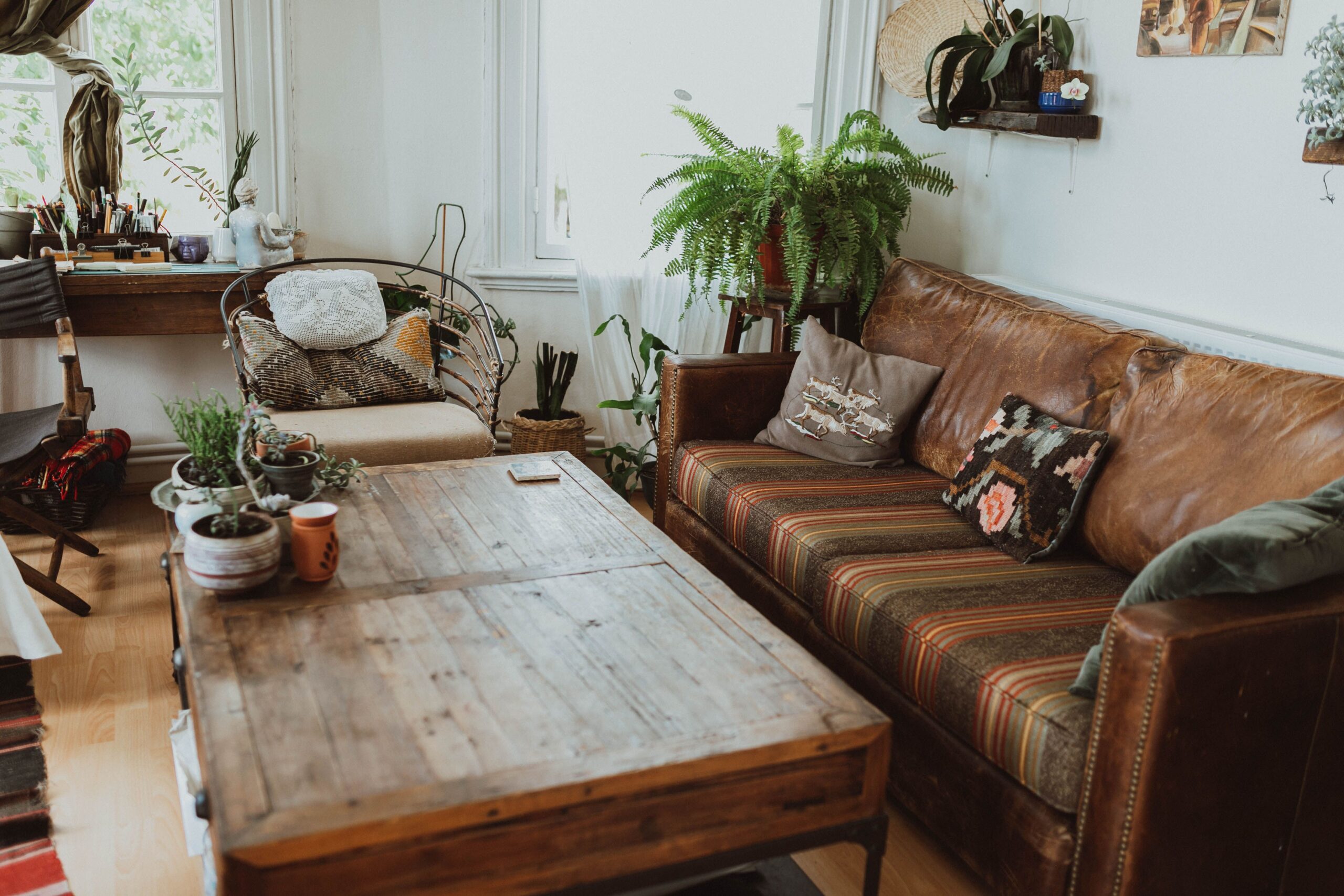
A single large plant in the corner of a living room does more than eight small ones scattered across every shelf. Not because it looks better — because it does something eight small ones can’t. It gives the room a visual anchor. It adds height. It moves slightly in air currents, creating the kind of subtle animation that tells your senses something alive is nearby.
Shayla Owodunni of The Plant Penthouse, who has been building nature-connected interiors for nearly a decade without a backyard, has a rule worth keeping: group plants in odd numbers. One, three, or five. Nature is asymmetrical, and groupings that mirror that asymmetry feel organic in a way that even rows never do.
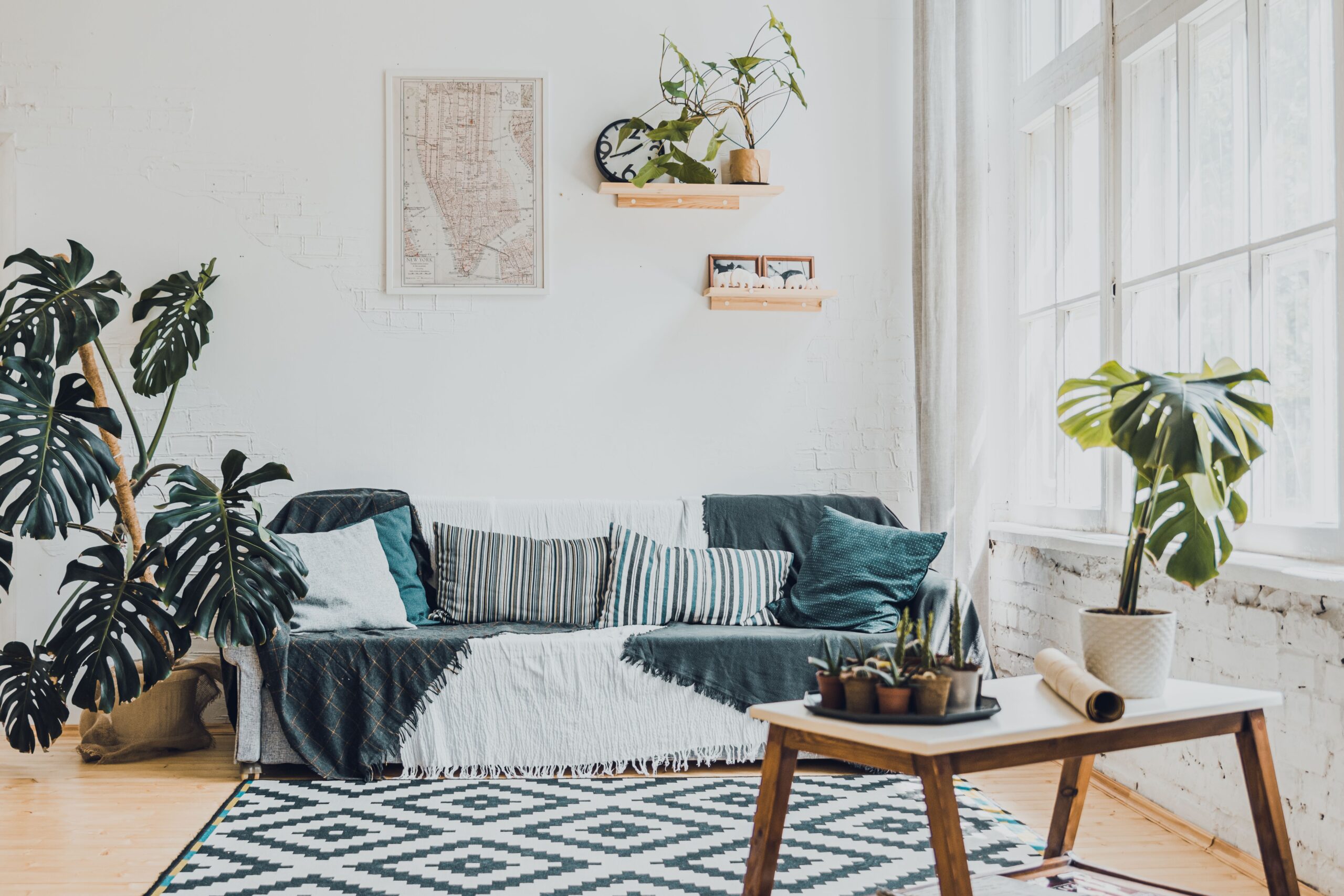
Start here: One large plant — a fiddle leaf fig, a monstera, an olive tree — in the corner your eye travels to first. Give it real presence before adding anything else.
Wood — look for something that still tells you it was once a tree
Here’s the simple version of this: wood with visible grain, knots, and variation feels different from wood that’s been finished into smoothness and uniformity. Not just aesthetically different. Your hands know the difference. Your eyes know the difference. A laminated surface and a live-edge table can be the same color, the same shape — and one of them will feel like something, and one won’t.
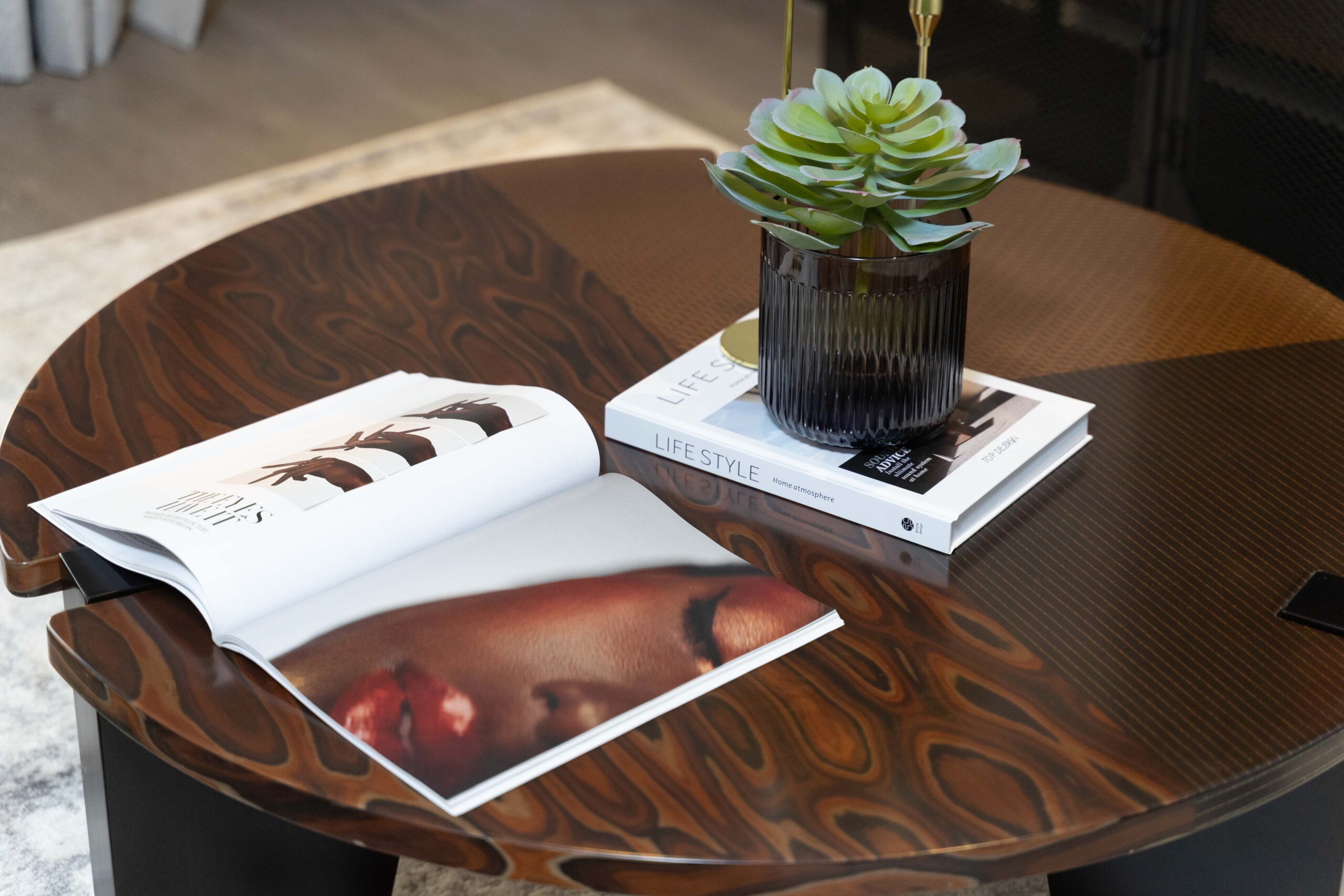
You don’t need to replace everything. One piece — a coffee table, a side table, a floating shelf — that honestly shows its grain is enough to shift the material character of a whole room. Look for something that still looks like it remembers what it was.
Continue Reading
10 Small Patio Ideas That Make You Want to Spend More Time Outside
Linen — the material that gets better with time
You know how a linen throw gets better every time you wash it? Softer, more relaxed, more itself? That’s not a flaw in the fabric. That’s the whole point.
Synthetic materials don’t do this. They start fresh and slowly degrade. Natural linen starts imperfect and slowly improves. And a room with things in it that improve with time feels fundamentally different from one full of materials that only go one direction.
A linen sofa, linen curtains, a single linen throw — any of these introduces a material your hands will keep returning to, without quite knowing why. Undyed or naturally dyed, in cream, oat, or warm sand, it carries warmth without trying to look rustic.
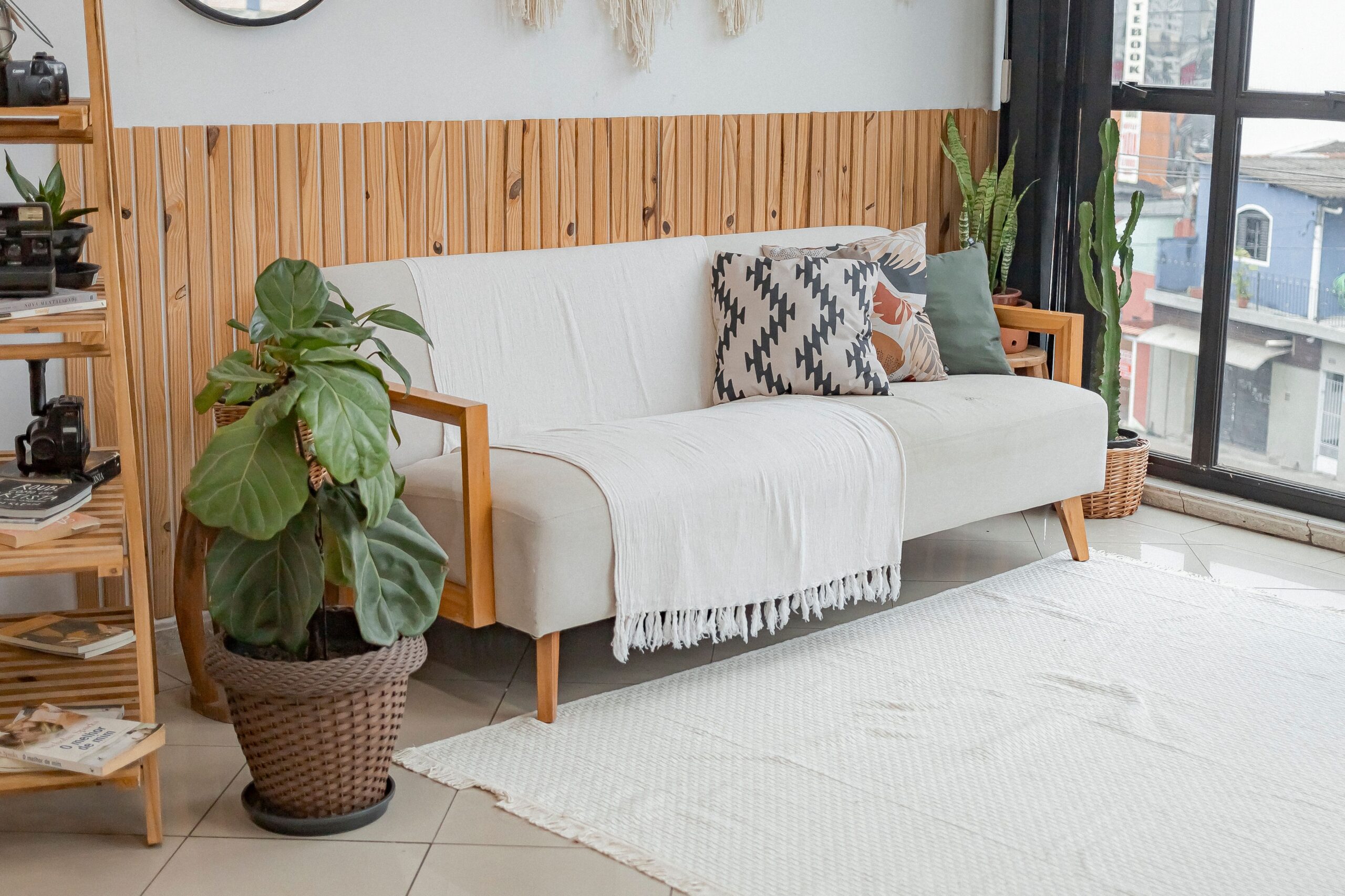
Do this: If there’s a synthetic throw on your sofa that’s been there for two years, swap it for linen. Same spot, same function, completely different room.
Natural light — the one that’s already free
A 2022 study of nearly 4,000 surgical patients found that hospital rooms with windows cut post-surgery mortality by 20%. That’s not an aesthetic finding. That’s clinical. Natural light is not a nice-to-have — it’s genuinely doing something for the people inside a room.
Our bodies are regulated by light in ways most of us never consciously register. Daylight that changes through the day — cool in the morning, warm and gold in the afternoon — signals time and season in a way no ceiling fixture ever can. A room where the light never changes feels sealed, static, slightly off in a way that’s hard to name.
The simplest fix: sheer curtains instead of heavy drapes. Not because they look good — because they let the light in and move with the air. A sheer linen curtain transmits 40–60% of available daylight. That’s enough to make a room feel alive through the day.
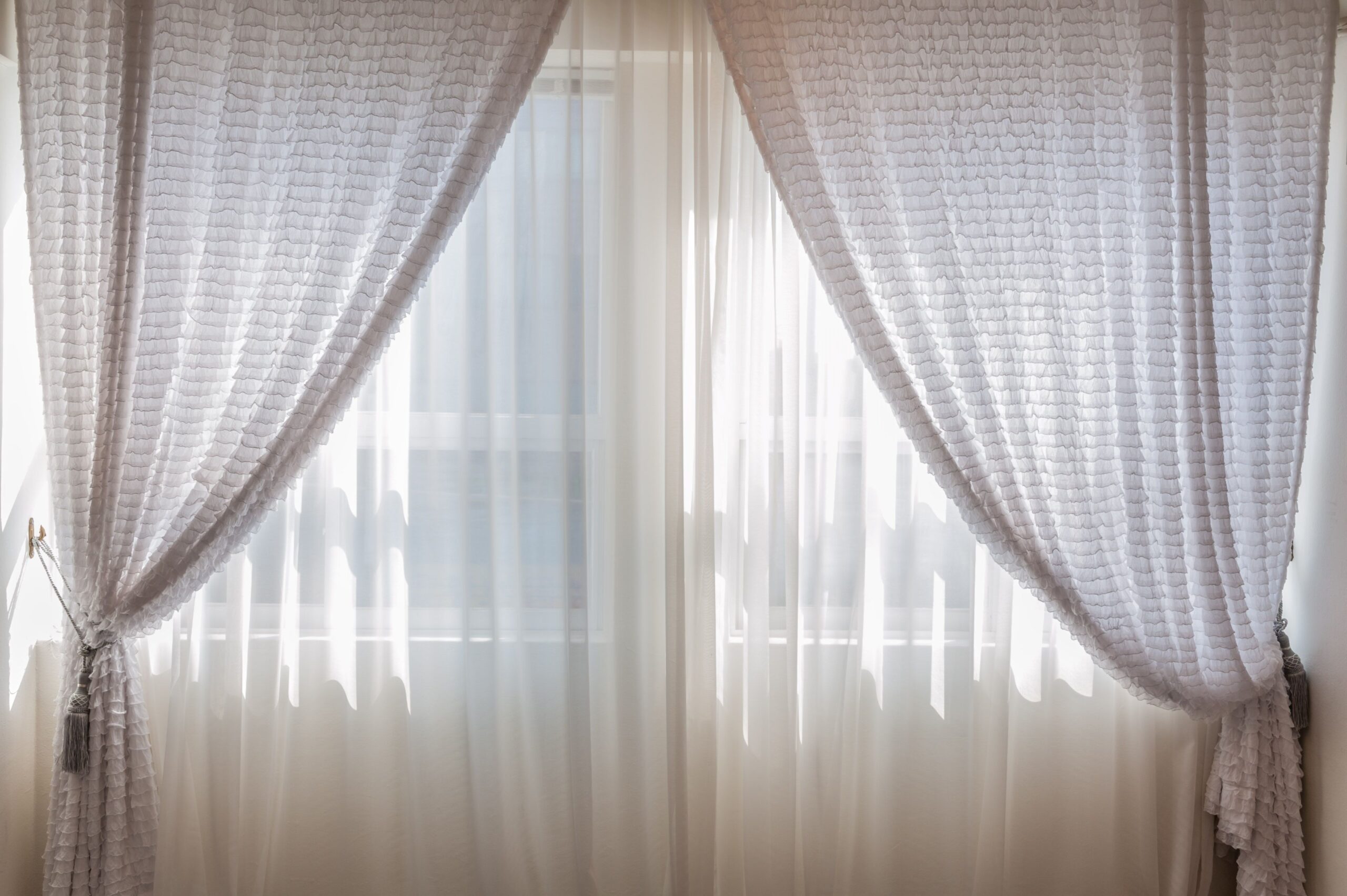
Do this: Open your curtains completely for one full day. Notice how the room feels by evening compared to the version you’ve been living in.
Continue Reading
Why Your Kitchen Always Looks Messy (Even Right After You Clean It)
Stone — nothing else in your room is this old
I keep a smooth stone on my coffee table that I picked up on a beach years ago. I don’t know why, exactly — it’s not decorative in any traditional sense. But I’ve moved it from apartment to apartment, and it’s always ended up somewhere visible.
Nothing else in a living room is older than a piece of stone. A travertine coaster, a marble tray, a river stone on a shelf — these objects carry a kind of permanence that nothing manufactured can replicate. And in a room with things that grow and change, one thing that has been exactly itself for millions of years creates a quiet balance.
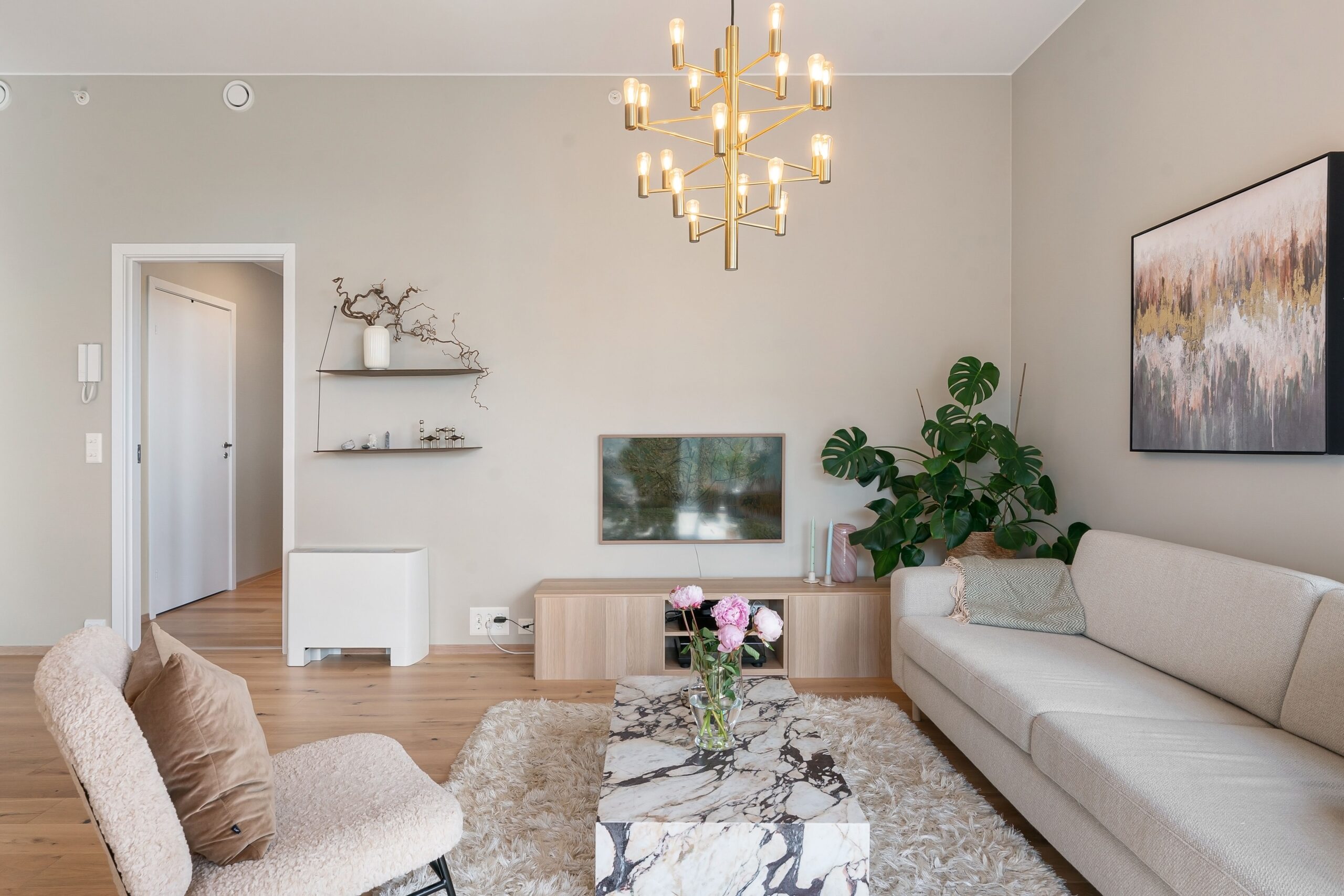
You don’t need a stone feature wall. One mineral element — a travertine lamp base, an unpolished stone bowl, a marble side table — does real work in a room, even if you couldn’t explain exactly why.
Texture — because your hands know things your eyes don’t
Close your eyes in your living room and touch five things within reach. If everything feels the same — smooth, uniform, synthetic — that’s the gap. Most modern rooms are full of surfaces that feel identical, and your senses notice even when your eyes don’t.
A jute rug underfoot, a rattan chair, a wool throw, an unglazed ceramic vase — these don’t just add visual interest. They add sensory variety, the kind that natural environments provide constantly and sealed indoor rooms almost never do.
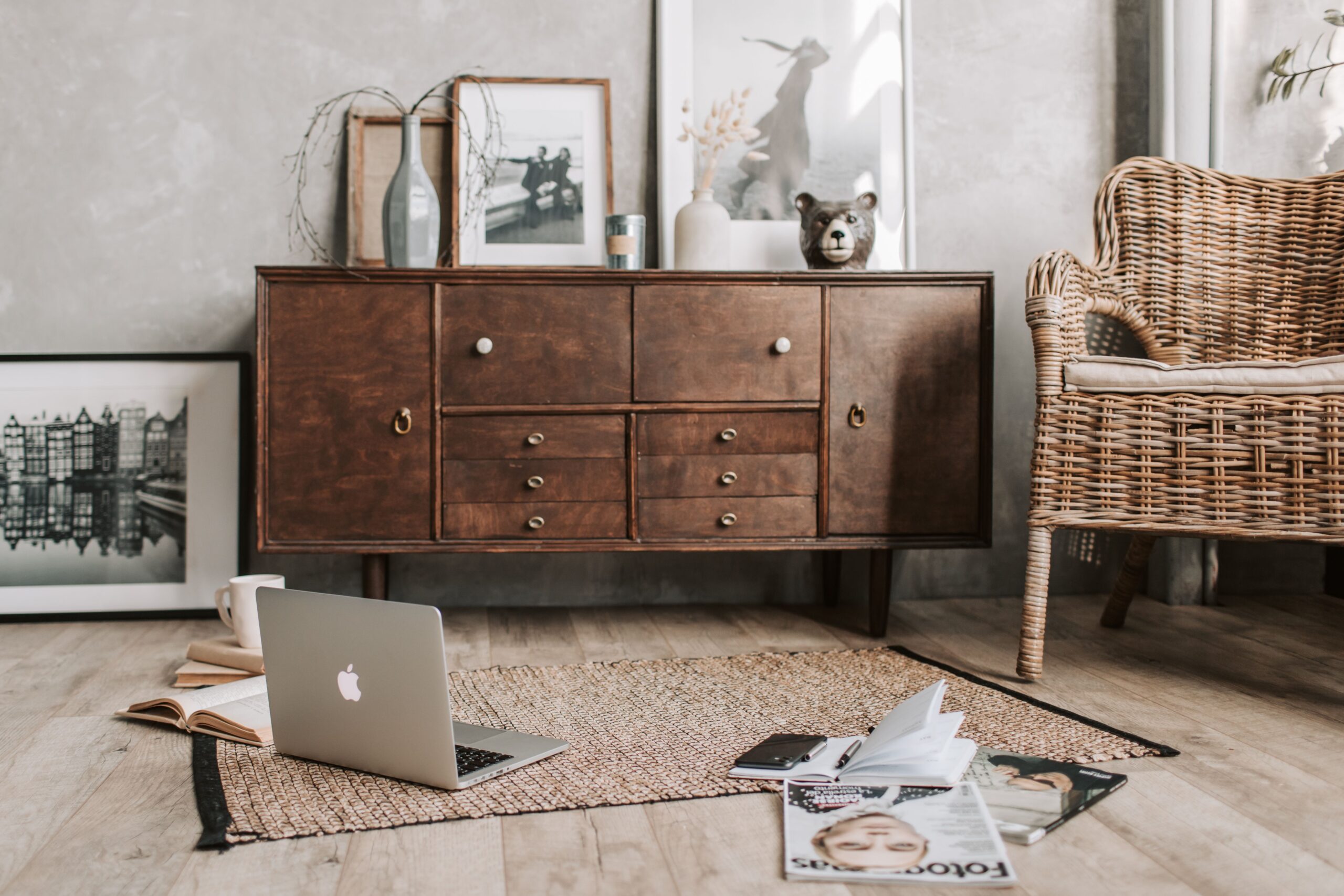
Natural rooms aren’t just beautiful because of what they look like. They’re beautiful because your hands recognize them too.
You don’t need to overhaul anything. Start with one thing — a real plant that has actual presence, a piece of wood that shows its grain, a linen throw that replaces the synthetic one, a stone that you picked up somewhere and kept for no reason you could explain. Let your room become a little more honest. A little more textured. A little more like the world your body was built for.
The most beautiful living rooms aren’t the most decorated ones. They’re the ones that feel like something in them is breathing.