Why Your Bedroom Still Feels Cluttered (Even After You Clean It)
This article may contain affiliate links. That means if you purchase a product through one of these links, we may earn a small commission at no additional cost to you.
Okay, can I be honest about something? I once spent an entire Saturday cleaning my bedroom. Laundry folded, surfaces wiped, floor completely clear. I stood back, looked at it, and felt… nothing. Not the calm I was expecting. Not the “ahh, finally.” Just a vague, slightly annoying sense that something was still off.
Turns out I hadn’t cleaned the problem. I’d just cleaned the room.
Here’s the thing most people don’t realize: cleaning and decluttering are two completely different jobs. Cleaning removes dirt. Decluttering removes visual noise — and visual noise is almost always what’s actually bothering you. Your brain is constantly scanning everything it can see, and every object on display makes a tiny demand on your attention. Even the ones you stopped consciously noticing. Individually those demands feel minor. Together they quietly exhaust you, which is why you can spend three hours tidying a bedroom and still walk in that evening feeling like something’s wrong.
At Bluvelle, we call this the difference between a clean bedroom and a calm one. Here’s what’s probably keeping yours stuck in the first category.
1:- The chair. You know the one.
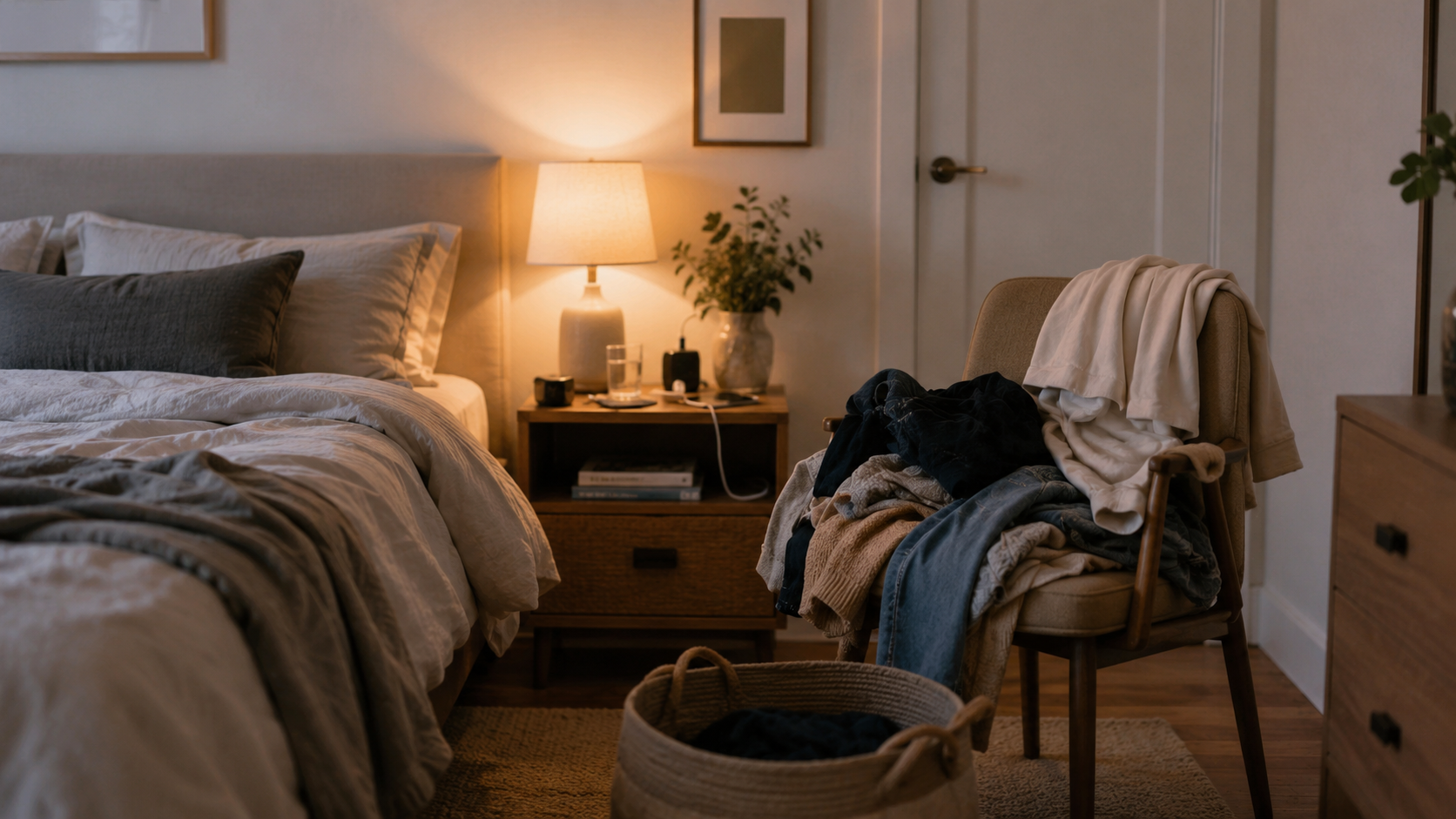
Every bedroom has it. It’s not a chair anymore — it hasn’t been a chair for months. It’s a place where clothes go to enter a philosophical grey zone between clean and dirty. You’re going to wear that jumper again. Definitely. Probably. Maybe. And so it sits there, draped over the back with the quiet confidence of something that knows it’s not going anywhere.
The real problem isn’t the clothes. It’s that your brain registers that chair as an unfinished decision every single time you walk past it. And unfinished decisions, even tiny ones, keep your mind lightly alert when it’s supposed to be winding down.
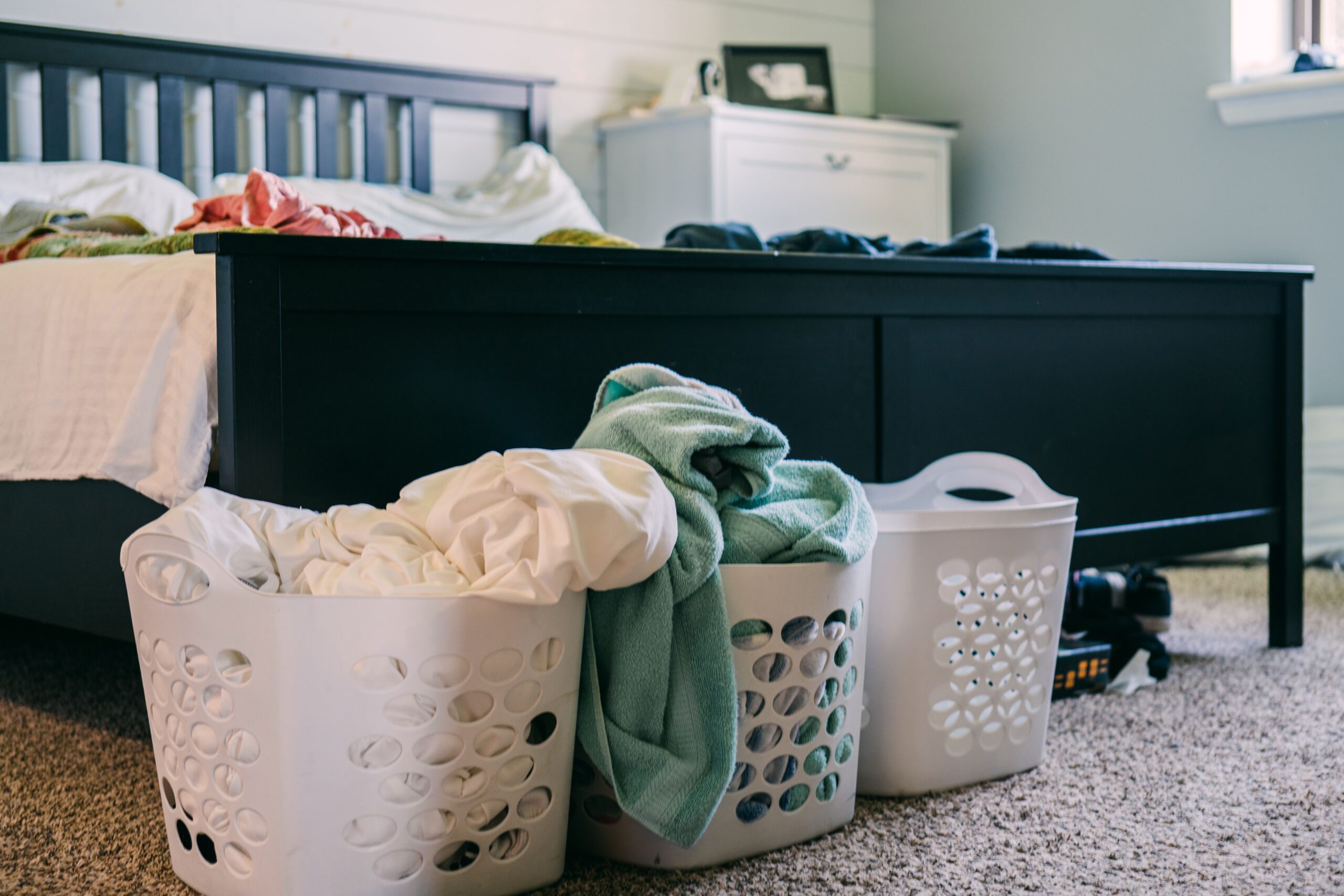
Do this: Get a Laundry hamper that actually closes. Not the open wire basket in the corner that just displays the chaos more openly. A proper hamper with a lid. The clothes go in, the lid goes on, and your brain stops filing them under “things to deal with.” Simple, cheap, genuinely transformative.
2:- Too many pillows with nowhere to go at night
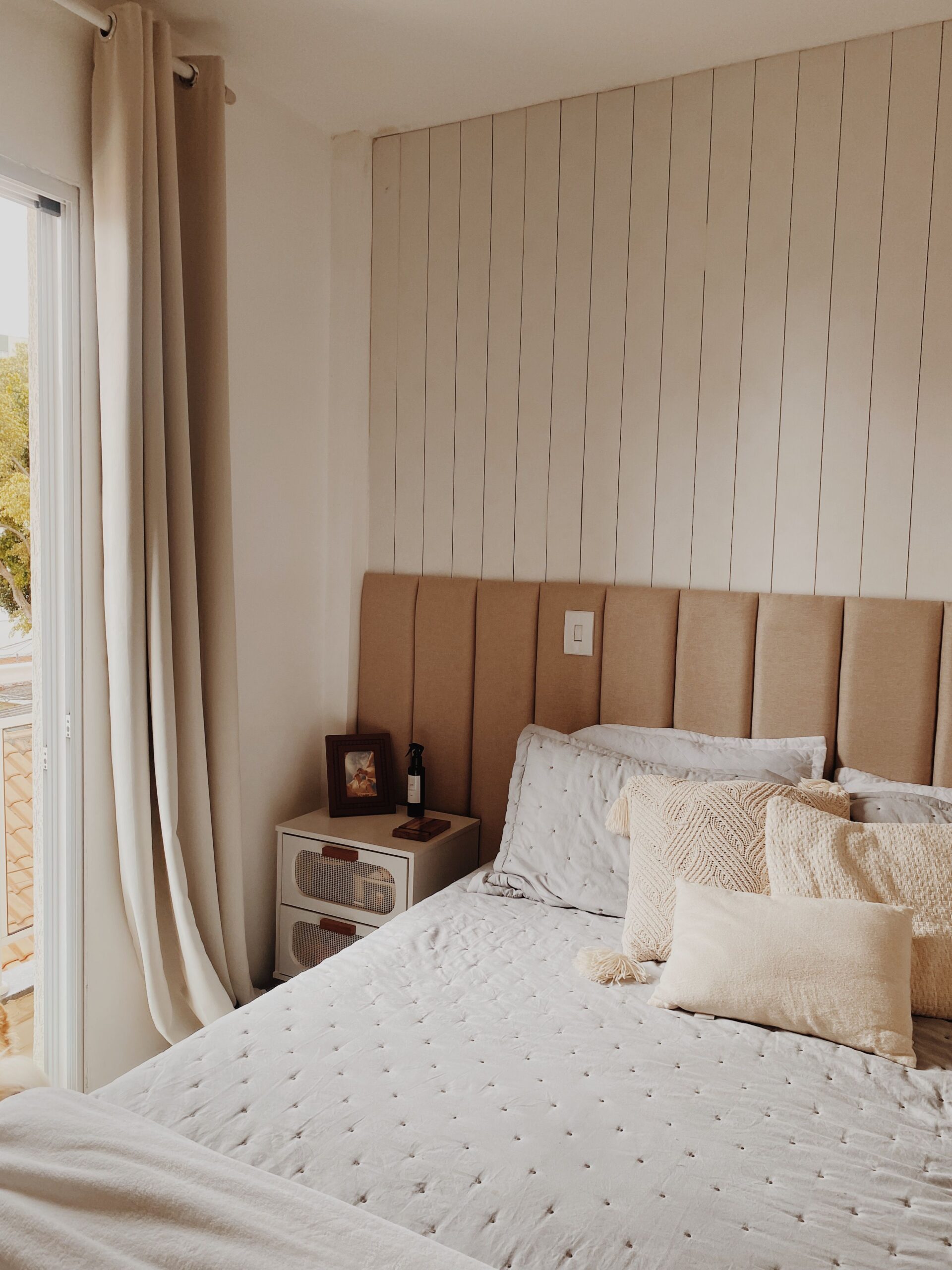
Decorative pillows are one of those ideas that look incredible in a magazine and create a small nightly frustration for the person who actually sleeps there. Where do they go when you get into bed? The floor? That chair? The pile on top of the laundry hamper you just bought?
Anything without a clear home will eventually end up somewhere wrong. And pillows without a landing spot become micro-clutter that resets every single evening, no matter how tidy the rest of the room is.
Do this: Edit the pillow arrangement down to what you’ll actually use — two sleeping pillows, two Euro shams if you love them, and one decorative cushion at most. Then decide where they go at night and make that the rule. A storage ottoman at the foot of the bed works beautifully — it looks intentional and actually contains the extras. Two problems, one piece of furniture.
Also Read:- The Lighting Changes That Made My Living Room Feel More Expensive
3:- Charging cables — the clutter you’ve literally stopped seeing
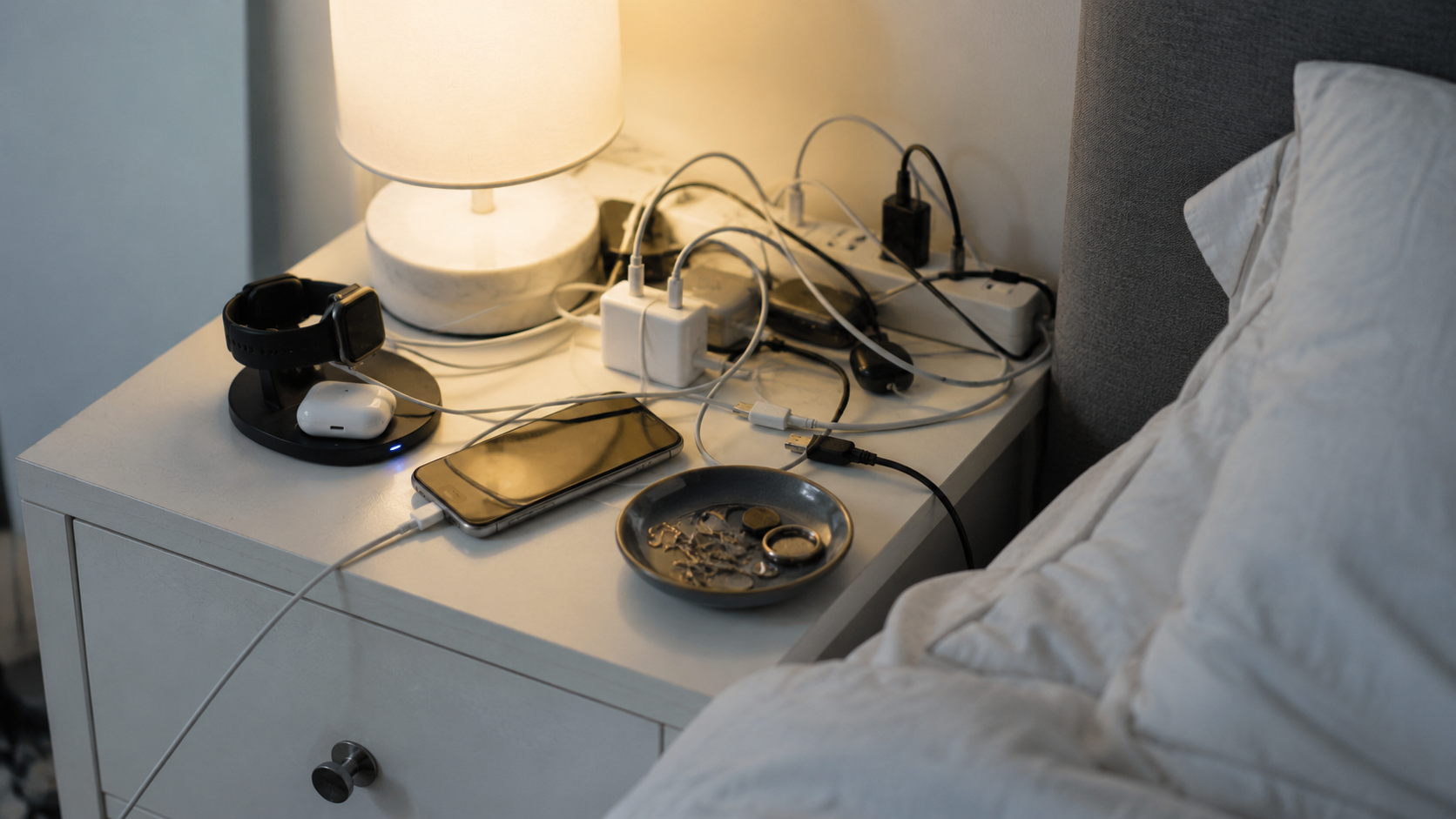
This is the sneaky one. The charging cable snaking across the nightstand, the adapter that’s been plugged in for six months, the earbuds sitting in a tangle next to the lamp. You’ve walked past these things so many times your brain has genuinely filed them under “doesn’t exist.” But they do exist. And they’re quietly making your bedroom feel more like an office than a place to rest.
Here’s the thing about bedrooms specifically: when your sleeping space has visible tech items scattered around, your brain doesn’t fully shift into rest mode — it keeps one foot in “alert and available.” Which is exactly why you can lie down in a visually cluttered bedroom and still feel weirdly restless an hour later.
Do this: A cable organizer box — the kind that sits on your nightstand and routes cables through small openings — removes all of this from sight without removing the function. Everything still charges. You just can’t see any of it. Pair it with a simple nightstand tray that holds only three things: lamp, water, one book. That’s the entire nightstand sorted.
4:- Open surfaces that became storage without asking permission
Here’s a thing that happens slowly, and then all at once. The nightstand starts with one lamp. Then a book. Then a glass of water. Then the receipt from last Tuesday, a hair clip, the book you finished three weeks ago, and something you genuinely cannot explain the presence of. None of these were decisions. They were just put-downs.
The issue isn’t that you’re messy. It’s that open surfaces attract objects the way a flat surface near a door attracts keys. It’s not personal. It’s physics.
Do this: The three-item nightstand rule — lamp, water, one current book. Everything else goes in the drawer. A small decorative box on the dresser top contains the small daily accumulations (jewelry, coins, the thing you can’t explain) so they look contained rather than scattered. Same amount of stuff. Completely different visual result. This is one of the easiest and most immediately satisfying fixes on this entire list.

5:- Mismatched furniture your eye can’t settle on
This one is subtle enough that most people never name it, but they feel it constantly. When the furniture in a bedroom doesn’t share a visual language — different wood tones, different leg styles, different scales all in one room — your eye moves around looking for a pattern and never quite finds one. It’s not chaotic exactly. It’s just unsettled. Like a conversation where nobody quite agrees but nobody says so either.
You don’t need to replace everything. You need one unifying element — a consistent material, a repeated color in textiles, matching hardware — that gives the eye somewhere to land.
Do this: Matching storage baskets or a coordinated set of nightstand trays in the same material create visual cohesion without touching the actual furniture. It’s the same trick designers use to make a “collected over time” room look intentional rather than accidental. Inexpensive, immediate, and it actually works.

Also Read:- A Blank Living Room Wall Doesn’t Need More Art — It Needs This
6:- Wrong lighting — and it’s doing more damage than you think
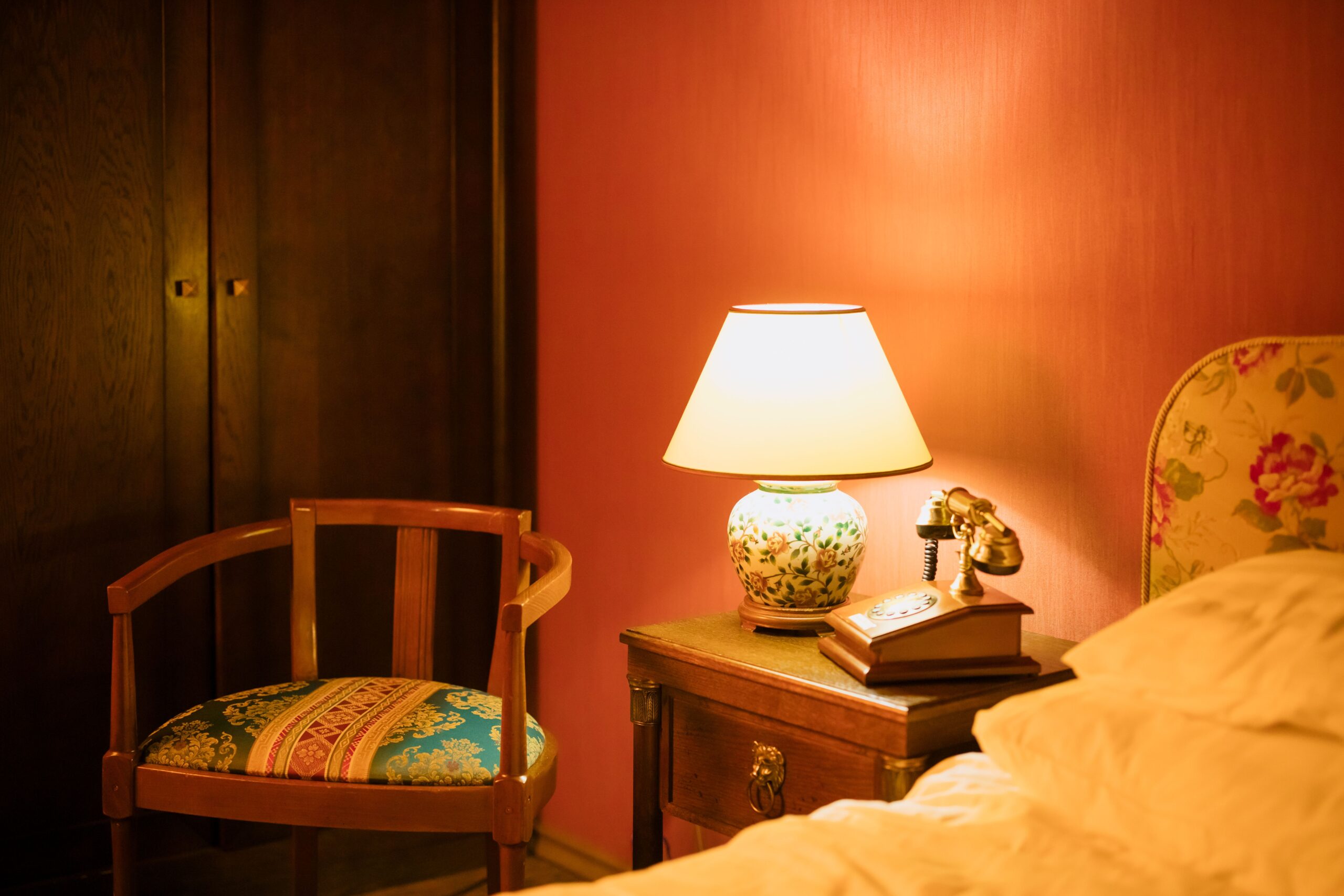
Okay, this one I feel strongly about. Overhead bedroom lighting was designed to help you see the room — not to help you relax in it. Cool, bright light overhead tells your brain it’s daytime and activates your nervous system. Using it right up until you go to sleep is one of the most common bedroom mistakes there is. And it makes a room feel harsher and more visually crowded than it actually is, because everything is lit at full intensity with nowhere to rest.
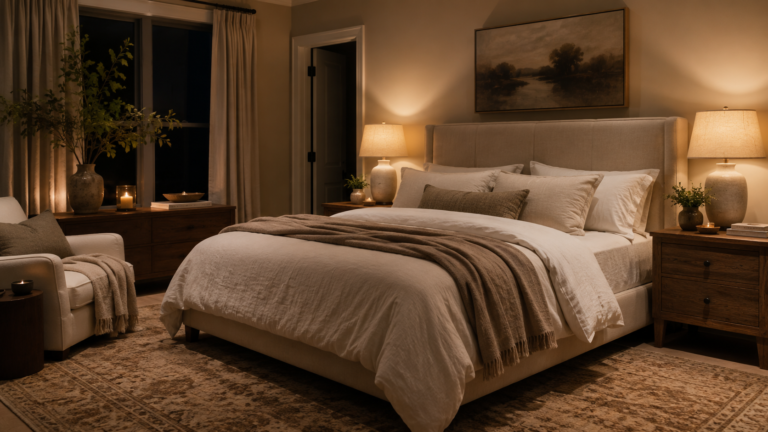
Warm light at eye level — a bedside lamp at 2700K, something soft on the other side of the room — changes the emotional temperature of a bedroom completely. Same furniture. Same clutter, technically. Softer light makes it all recede.
Do this: Overhead off by 9pm. Lamps only. Swap any bulbs above 3000K for warm white 2700K — available at any hardware store, usually under ten dollars for a pack. Add a plug-in dimmer switch for about twelve dollars and you have full control. This is the fastest, cheapest upgrade on this list, and the one most people notice first.
7:- Color overload — when the room has too much to say
I’m not going to tell you to paint everything beige. That sounds miserable and honestly, it’s not the answer. But here’s what I will say: if your bedroom currently has five competing colors and none of them are really talking to each other, that’s a lot of work for a room that’s supposed to help you sleep.
A terracotta cushion, a blue throw, green curtains, a patterned rug in four more shades. Each one might be beautiful on its own. You probably bought them because they were. But together they create a room where the eye never quite lands anywhere with satisfaction — it just keeps moving, looking for somewhere to rest, and never finding it.
The most beautifully curated bedrooms aren’t colorless. They’re just edited. One dominant color, one secondary, one accent — and everything else quietly supports that palette rather than competing with it.
Do this: Don’t redecorate. Just identify the one item that clashes most noticeably with everything else and remove it. One thing. You’ll be surprised how much the rest of the room exhales around that single edit.

Also Read:- 25 Best Kitchen Tools Every Home Cook Should Own (2026 Guide)
8:- No focal point — so the eye wanders forever
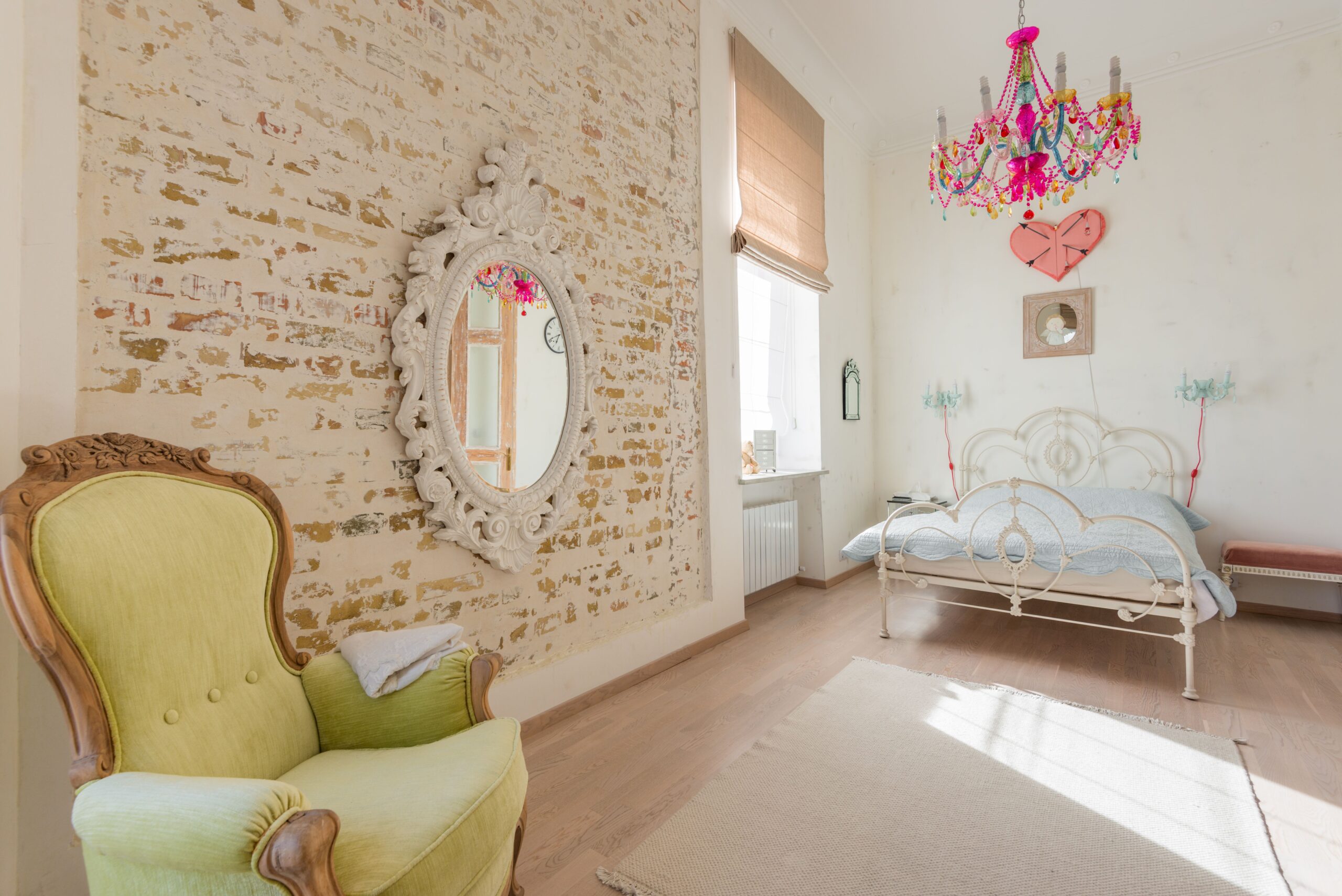
Every calm, well-designed bedroom has somewhere for the eye to land first. A statement headboard. A piece of art properly hung above the dresser. A beautifully styled corner with a plant and a lamp. When there’s no clear focal point, the eye drifts — and when the eye drifts, the brain works. A room that keeps your brain working is a room that won’t let you rest.
Do this: Decide what the focal point of your bedroom is — the bed, a wall , a corner — and make it deliberate. Then let everything else support it. One large piece of art hung correctly does more for a bedroom’s sense of calm than a dozen small objects scattered across every surface.
Here’s what I want you to take from this: your bedroom doesn’t feel cluttered because you didn’t clean it properly. It feels cluttered because cleaning and creating calm are two different skills — and most of us were only ever taught one of them.
Pick the section that made you quietly say “yep, that’s mine” and start there this week. One change. Not eight. The bedroom you actually want to come home to gets built one honest decision at a time.
That’s the whole Bluvelle philosophy, honestly. Not a renovation. Not a spending spree. Just a room that finally feels like it was made for the person living in it.