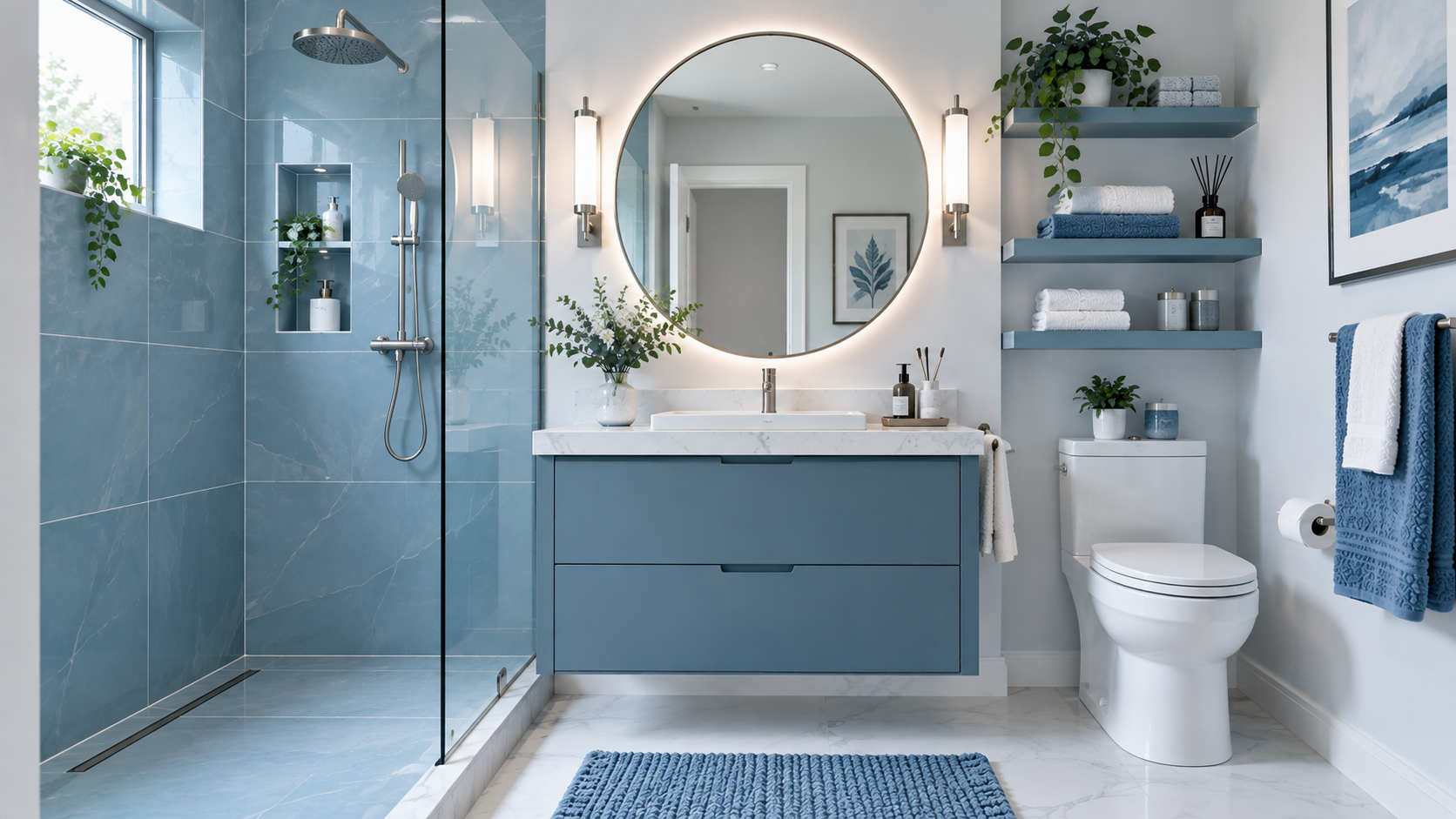
25 Small Bathroom Ideas That Make the Space Feel Bigger.
A small bathroom can be one of the trickiest spaces in the home to decorate. You may have everything you need—a vanity, shower or tub, toilet, and storage—but the room can still feel cramped.
The good news is that you don’t always need a bigger bathroom. The right design choices can make a small bathroom feel brighter, more open, and much less crowded.
From choosing the right mirror and lighting to reducing visual clutter and making better use of vertical space, there are plenty of ways to work with the square footage you already have.
So, if your bathroom feels a little too tight, don’t worry. Here are 25 small bathroom ideas that can make the space feel bigger without requiring a complete remodel.
Make the Bathroom Look Bigger
Before changing colors or adding new decor, start with the way the space is laid out and how your eye moves through it. In a small bathroom, things like mirrors, shower enclosures, tile placement, and open sight can make a noticeable difference. These simple ideas can help the room feel less boxed in and more open—without changing its actual size.
1: Choose a Large Mirror—and Take It Higher
A large mirror is one of the easiest ways to make a small bathroom feel more spacious. It reflects both natural and artificial light while visually expanding the wall behind your vanity. Instead of choosing a small mirror simply because the bathroom is small, consider going wider or taller. A mirror that extends close to the ceiling can also draw the eye upward and make the room feel taller.
Tip: If you have the space, consider a mirror that is slightly wider than the vanity.
2: Ditch the Shower Curtain
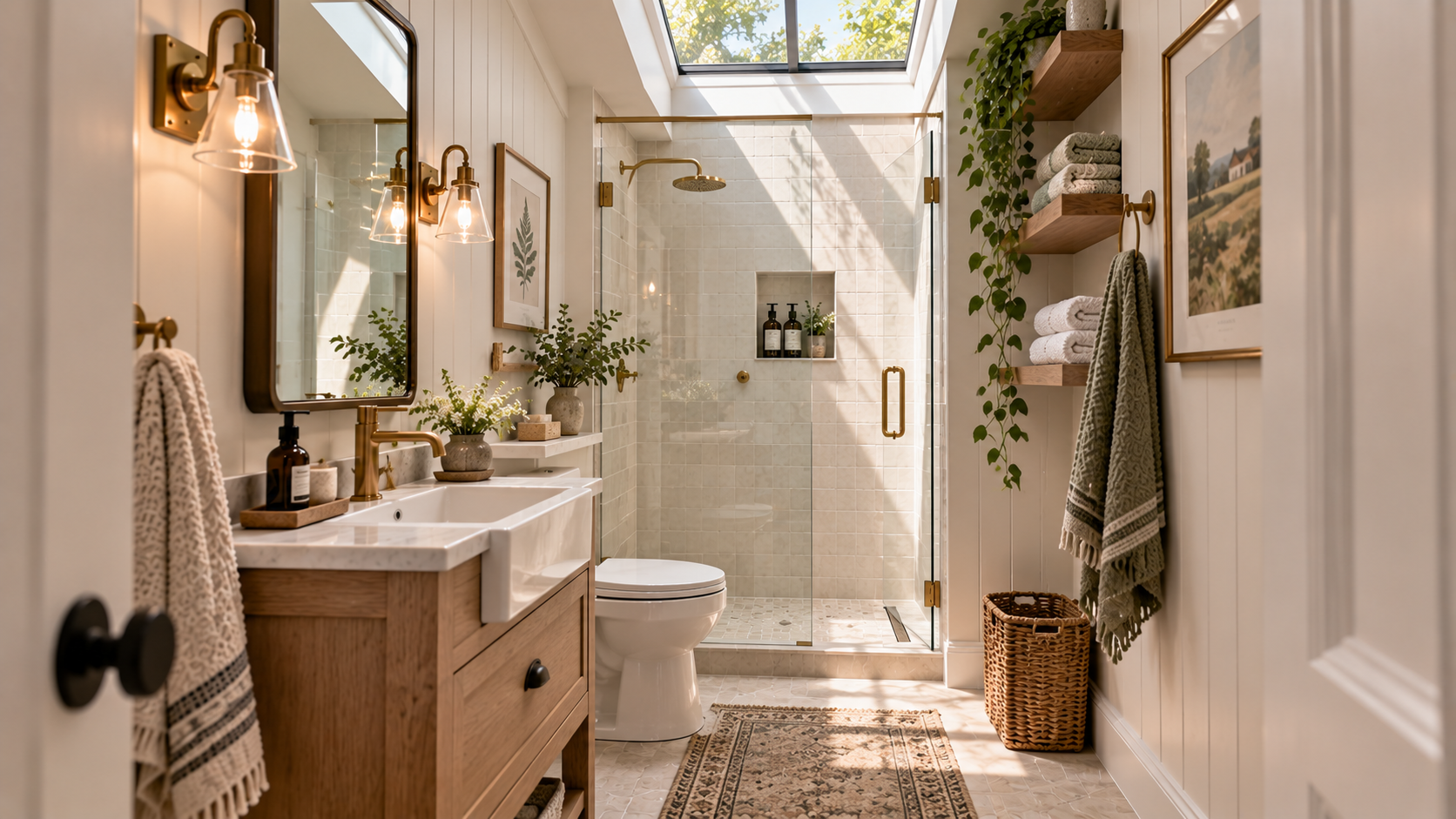
A traditional shower curtain can create a visual barrier between the shower and the rest of the bathroom. When it’s closed, you lose sight of a large portion of the room. If your layout and budget allow, consider switching to a clear glass shower door. The open sightline makes it easier for your eye to travel across the entire bathroom, which can make the room feel noticeably larger. This is especially useful in a small walk-in shower where every bit of visual openness matters.
3: Choose a Frame less Shower Enclosure
If you’re replacing your shower enclosure, consider a frame less or minimally framed glass design. Heavy frames can create another strong visual boundary in an already small room. Clear glass, on the other hand, keeps the shower area visually connected to the rest of the bathroom. It’s a relatively simple design choice, but the result can be a cleaner and more open-looking space.
4: Continue the Same Tile Through the Shower
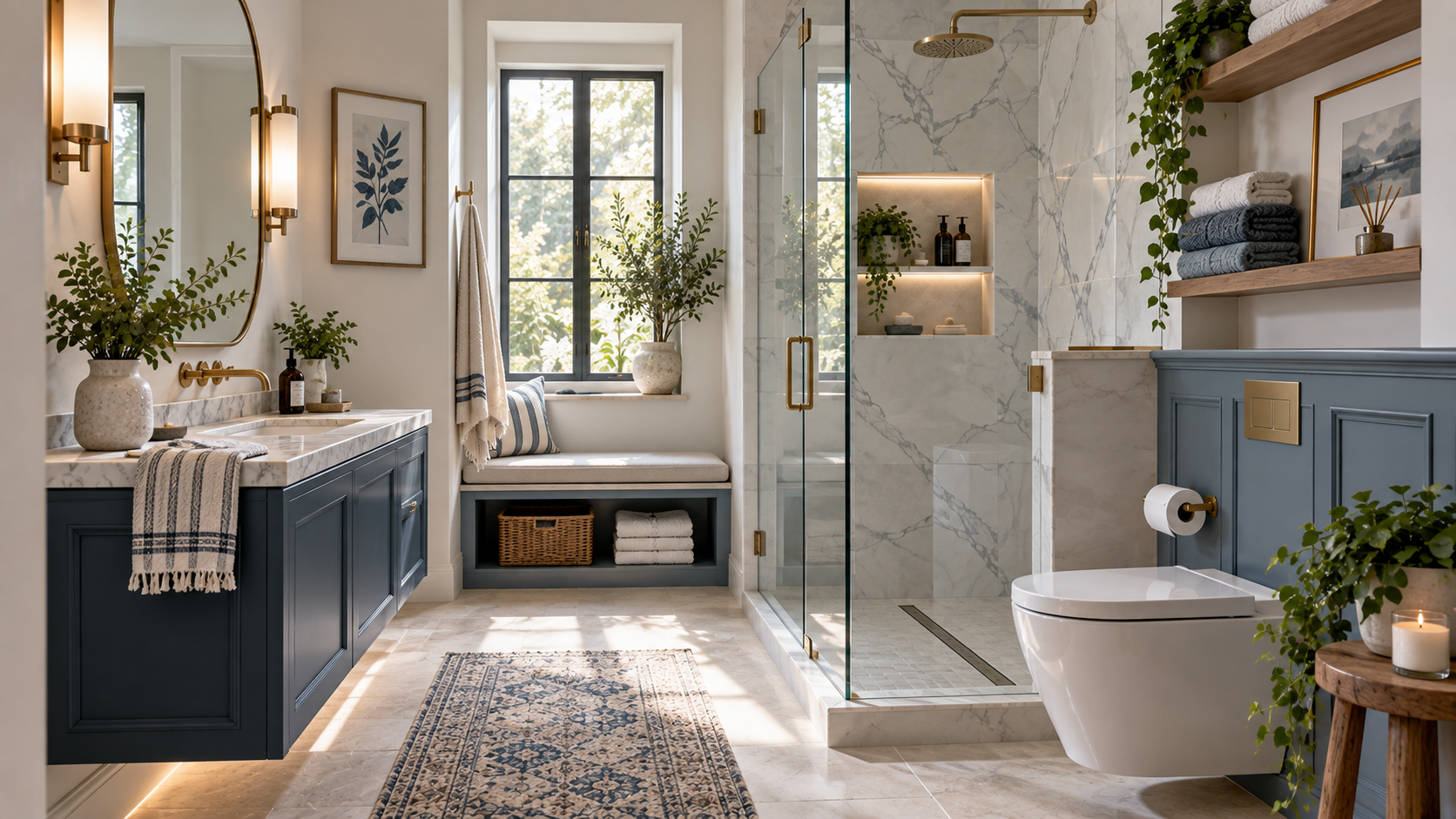
One of the easiest ways to make a bathroom feel visually fragmented is to use completely different finishes in every area. Instead, consider carrying the same tile—or a very similar tile—from the main bathroom into the shower. The continuous surface creates a smoother visual flow and makes the room feel less divided.Large-format tiles can make this effect even stronger because they have fewer grout lines.
5: Keep the Visual Flow Open
In a small bathroom, every visual interruption counts. Try to choose fixtures, finishes, and furniture that work together instead of making each area compete for attention. Keep pathways clear and avoid placing bulky pieces where they aren’t necessary.
Think of it this way: the easier it is for your eyes to move around the room, the more open the bathroom tends to feel.
Read More: 25 Cozy Bedroom Ideas You'll Want to Copy This Year.
         : 40 Fall Home Decor Ideas: Cozy Autumn Inspiration for Every Room.
Light & Color Make a Big Difference
Light and color can completely change how we experience a small room. You don’t need to make everything bright white, either. The goal is to create a space that feels light, cohesive, and comfortable.
6: Choose a Light, Warm-Neutral Color Palette
Light colors can help reflect available light and make the walls feel less visually heavy.Instead of defaulting to plain white, try warm whites, soft beige, cream, pale gray, or light taupe. These shades can make a small bathroom feel bright while still giving it some warmth and personality. If you love darker colors, consider using them as accents rather than covering every wall.
7: Maximize Natural and Artificial Light
If your bathroom has a window, make the most of it. Keep the area around the window clear and avoid heavy window treatments that block natural light. Then look at your artificial lighting. A small bathroom usually benefits from more than one light source. Combine overhead lighting with vanity lighting or wall sconces to reduce shadows and brighten darker corners.
Good lighting doesn’t just help you see—it can make the whole room feel more open.
8: Use Large-Format, Light-Colored Tiles
Small bathrooms don’t necessarily need small tiles. Large-format tiles can actually work beautifully in compact spaces because fewer grout lines create a cleaner, less interrupted surface. Pair them with a light or softly colored finish and the room can feel even more open. This doesn’t mean you have to cover the entire bathroom in white tile. A warm stone-look or subtle neutral tile can give you the same spacious effect while adding character.
9: Paint the Ceiling to Match the Walls
Here’s a simple trick that’s easy to overlook: don’t make the ceiling feel like a separate box. Using the same or a closely related color on the ceiling and walls can create a more continuous look. This can draw the eye upward and make the bathroom feel taller. It’s particularly worth considering if you have a low ceiling or a very compact bathroom.
10: Add Reflective Surfaces Strategically
Mirrors aren’t the only surfaces that can help bounce light around a bathroom. Glass, glossy tile, polished hardware, and other reflective finishes can add brightness and make the room feel more open. But don’t go overboard. You don’t need every surface to shine. A large mirror paired with a glass shower enclosure and one or two subtle reflective finishes is often more than enough.
Choose Fixtures That Work With the Space
A small bathroom doesn’t mean you have to sacrifice style. It simply means your fixtures need to be chosen with the room’s proportions in mind.
11: Try a Wall-Mounted Vanity
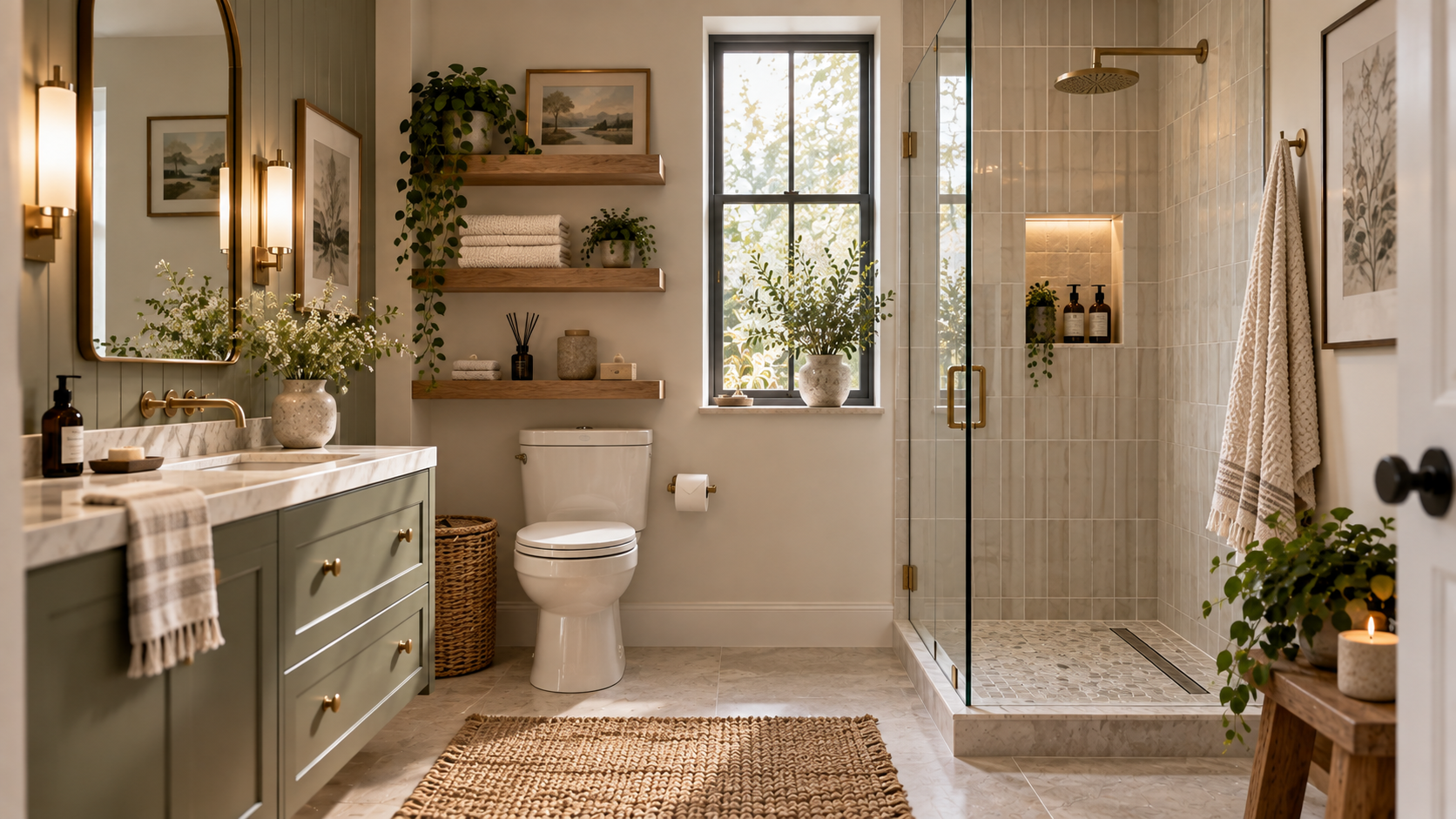
A floating or wall-mounted vanity can be a smart choice for a small bathroom. Because the vanity doesn’t extend all the way to the floor, more of the flooring remains visible underneath. That extra visual floor space can make the room feel lighter and less crowded.
Bonus: you still get useful storage without making the vanity feel like a giant piece of furniture.
12: Choose a Narrow, Proportional Vanity
When shopping for a bathroom vanity, it’s tempting to choose the largest one that will physically fit. But just because something fits doesn’t mean it’s the right size. A slimmer vanity can leave more room for movement while still giving you enough storage for everyday essentials. Look for a design that feels proportional to the bathroom rather than trying to maximize every available inch.
13: Consider a Corner Sink
If you’re dealing with a particularly tight bathroom or an awkward layout, a corner sink may be worth considering. Placing the sink in an unused corner can free up valuable floor space and improve the path through the room. This is more of a layout decision than a decorating trick, but in a truly tiny bathroom, good layout can make a bigger difference than good decor.
14: Try a Wall-Mounted Faucet
A wall-mounted faucet can help keep a small vanity looking clean and uncluttered. Because the faucet is installed on the wall instead of taking up space on the countertop, you may be able to use a shallower vanity or simply enjoy a little more counter space. It’s a small detail, but small details matter when you’re working with limited square footage.
15: Choose Soft, Rounded Fixtures
If your bathroom is tight on space, consider fixtures with softer, rounded edges. A rounded sink, curved mirror, or gently shaped vanity can make the room feel less rigid and can be easier to move around. You don’t have to make everything curved. Even one or two softer shapes can break up a room full of hard, straight lines.
Read More: Best Pillows For Sleeping: 20 Top Picks for Every Sleeper.
         : Why Your Bedroom Never Feels Relaxing?
Make Storage Work Harder
Clutter is one of the fastest ways to make a small bathroom feel even smaller. The solution isn’t necessarily more storage—it’s smarter storage.
16: Use Vertical Storage
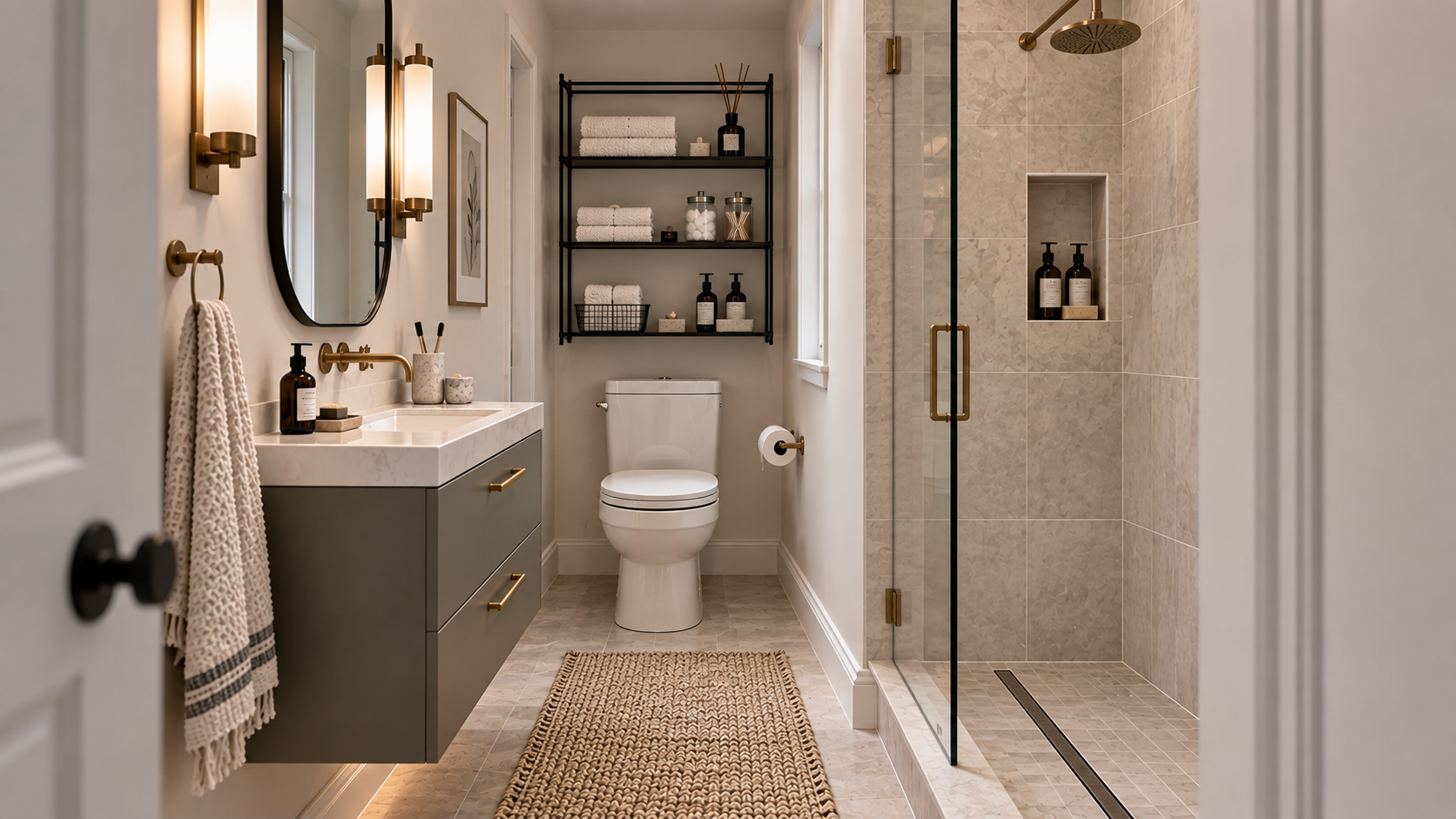
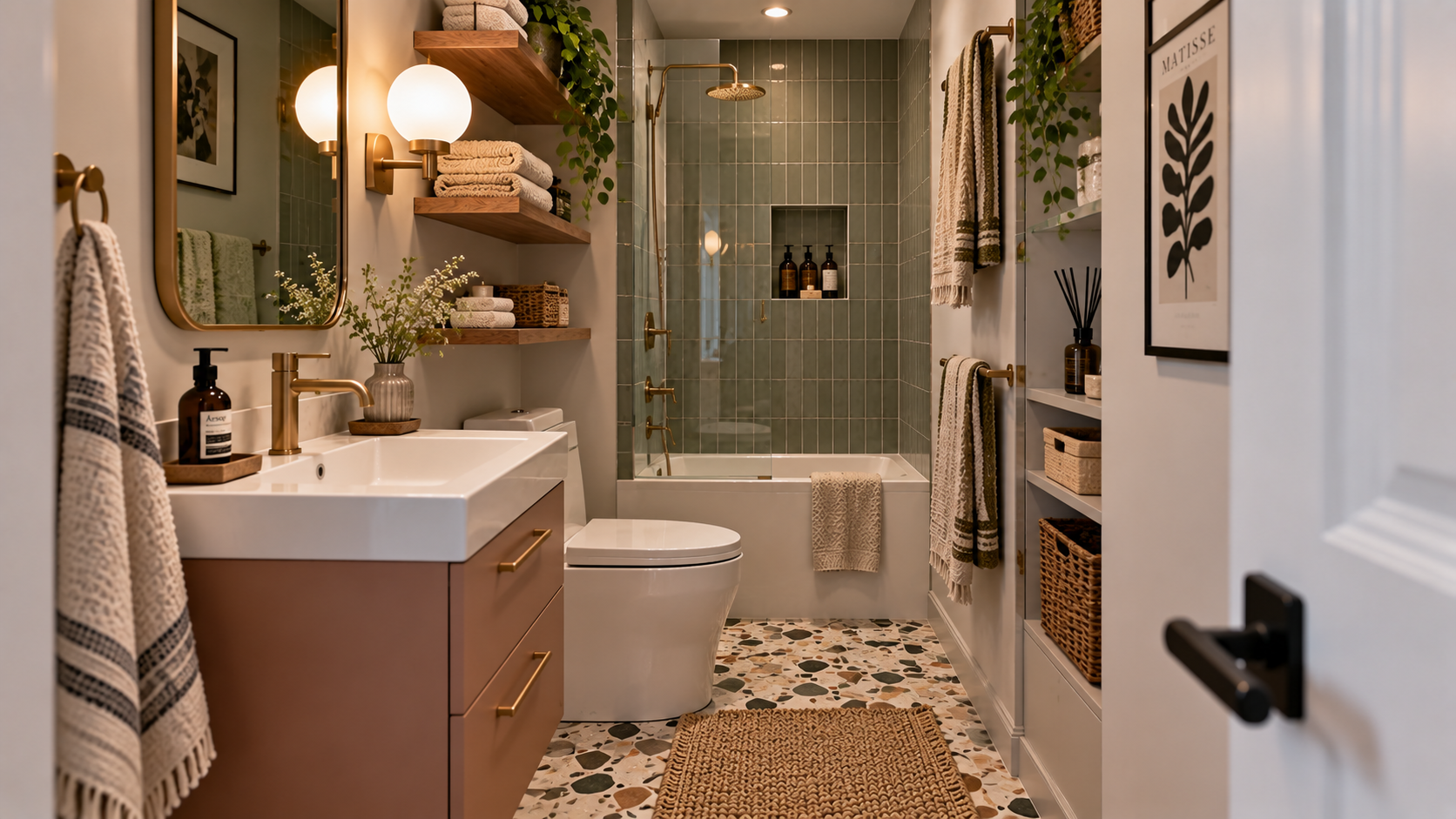
When you don’t have much floor space, look up. Tall, narrow cabinets, wall-mounted shelves, and over-the-toilet storage can use vertical space without taking up much room on the floor. Think height instead of width. That simple shift can give you considerably more storage while keeping the floor area open.
17: Add Recessed Storage
Recessed storage is one of those solutions you barely notice—and that’s exactly why it works so well. A recessed medicine cabinet or built-in shower niche can give you useful storage without sticking out into the room.
If you’re remodeling, this is definitely worth discussing with your contractor. If you’re not, there are plenty of surface-mounted options that can still keep things organized.
18: Use Floating Shelves Strategically
Floating shelves can be useful when you’re short on storage, but resist the temptation to fill every empty wall. One or two shallow shelves can hold towels, a small plant, or a few everyday items without overwhelming the room. Keep the styling simple. Empty space is part of the design, too.
19: Keep the Countertop Mostly Clear
This may be the cheapest idea on the entire list—and one of the most effective. Put away products you don’t use every day. Store makeup, hair tools, extra toiletries, and cleaning supplies inside drawers or cabinets whenever possible. A clear countertop immediately makes a bathroom look more organized and gives the eye fewer things to process.
20: Hide Everyday Clutter in Baskets and Bins
Small items can quickly take over a bathroom. Use baskets, bins, drawer dividers, or small organizers to keep everything in its place. Group similar items together so you aren’t searching through five different drawers every morning. The goal isn’t to hide everything. It’s to make sure the things you see are intentional.
Finish the Space With a Few Smart Details
Once you’ve handled the bigger design decisions, a few finishing touches can help pull everything together.
21: Hang the Shower Curtain Higher
If you prefer a shower curtain instead of glass, try mounting the rod higher than you normally would. Drawing the curtain closer to the ceiling can emphasize the vertical space and make the bathroom feel taller. Choose a simple, light-colored curtain if possible. Heavy patterns can add visual weight to an already small room.
22: Use One Appropriately Sized Bath Mat
Several small bath mats can visually break up the floor and make the bathroom feel busier. One appropriately sized bath mat creates a cleaner, more continuous look. Choose a style that complements your flooring rather than competing with it. Sometimes keeping things simple really does work best.
23: Keep Decor Proportional
A small bathroom doesn’t mean every piece of decor needs to be tiny. In fact, one larger mirror, piece of artwork, or statement light can sometimes look better than several small accessories scattered around the room. The key is proportion. Give each piece enough breathing room so the bathroom doesn’t start feeling like a display shelf.
24: Add One or Two Natural Elements
Natural materials can make a small bathroom feel warmer and more inviting. Try a small plant, wooden stool, woven basket, or natural wood accessory. These touches can soften a bathroom filled with tile and hard surfaces. Just keep it edited. You want calm and collected, not “I decorated every available surface.”
25: Create One Focal Point
Finally, give the eye somewhere to land. Maybe it’s an oversized mirror, a beautiful vanity, a statement tile, an interesting light fixture, or a piece of artwork. You don’t need ten interesting things in a small bathroom. One strong focal point can make the room feel intentional without making it feel busy.
7 Small Bathroom Design Mistakes to Avoid
Knowing what to do is helpful. Knowing what not to do can be just as important.
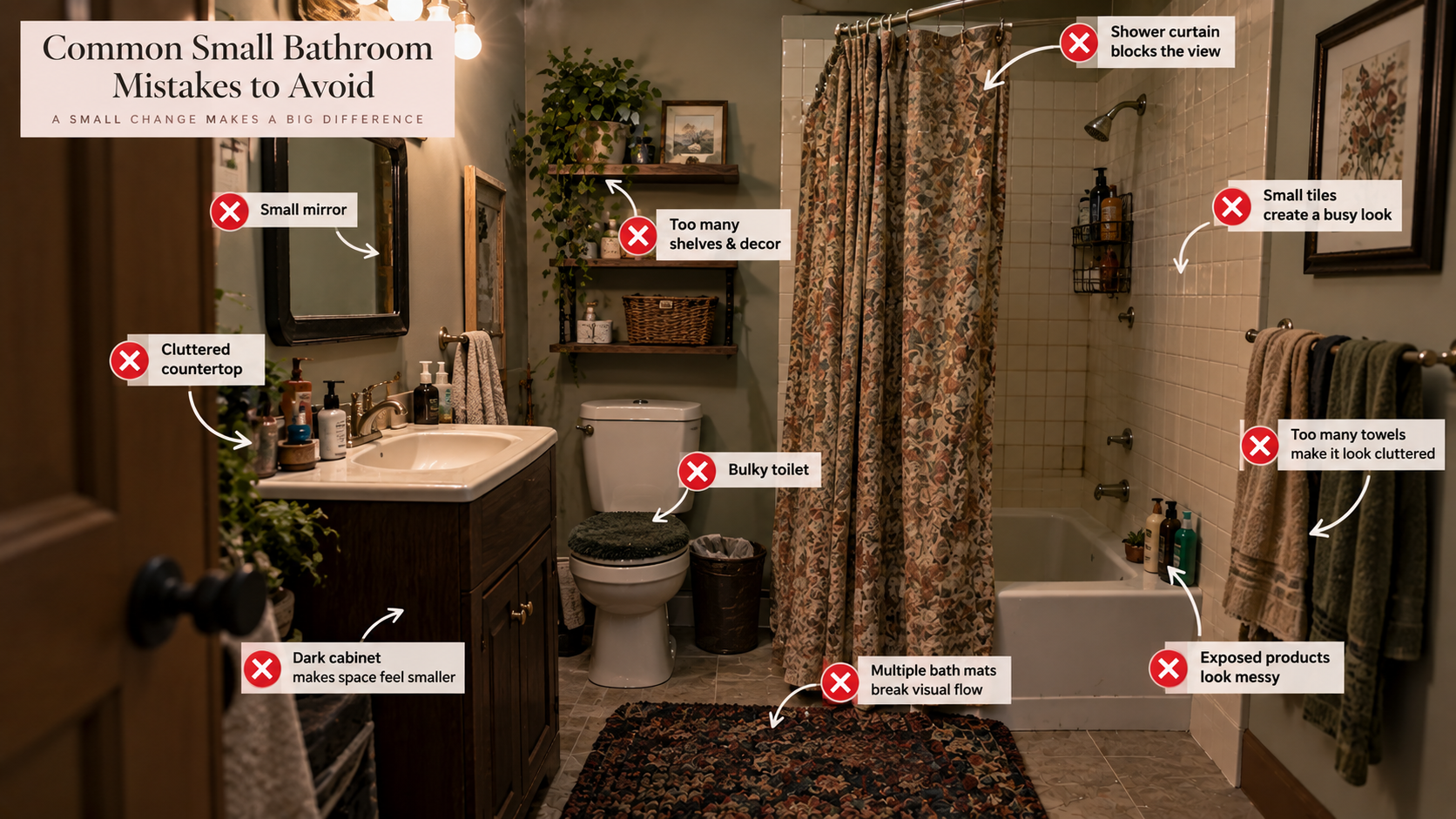
1: Don’t Overcrowd the Room
Trying to squeeze in too much furniture, storage, and decor can make the bathroom feel smaller than it actually is. Before adding something new, ask yourself whether you really need it.
2: Don’t Use Too Many Competing Colors
A lot of strong colors can visually break up a small bathroom. If you love color, bring it in through towels, artwork, accessories, or one accent wall rather than using several competing shades throughout the room.
3: Don’t Choose Oversized Fixtures
That huge vanity might look amazing in a showroom, but it could overwhelm your bathroom at home. Always consider the available walking space around the fixture, not just whether the fixture technically fits.
4: Don’t Block Natural Light
Heavy curtains, dark window treatments, or storage placed directly in front of a window can make a small bathroom feel darker. Whenever possible, let natural light do its job.
5: Don’t Cover the Room in Busy Small Tiles
Tiny tiles aren’t automatically wrong, but lots of grout lines and strong patterns can make a small bathroom feel visually busy. If you prefer smaller tiles, consider using them selectively rather than covering every surface.
6: Don’t Fill Every Shelf
Open shelving can quickly turn into a collection of half-used bottles and random toiletries. Leave some breathing room. A shelf doesn’t need to be completely full to be useful.
7: Don’t Rely on One Harsh Ceiling Light
A single overhead fixture can create shadows around the vanity and leave other parts of the room dark. Layer your lighting where possible, especially around areas where you need good visibility.
Last Words:
A Small Bathroom Doesn’t Have to Feel Small. Making a small bathroom feel bigger isn’t about following one magic design trick. It’s the combination of light, visual flow, smart storage, proper proportions, and less clutter that really makes the difference.
Start with the easiest changes first. Clear the countertop. Add a larger mirror. Improve the lighting. Replace a heavy shower curtain with clear glass if your bathroom allows it. Then, if you’re planning a renovation, think about bigger changes such as a floating vanity, recessed storage, or a better layout.
As designer Irene Gunter has noted in her small-bathroom advice, thoughtful choices around storage, light, and visual space can make compact bathrooms work much harder.
And that’s really the goal: not to pretend your bathroom is huge, but to make the space you already have feel comfortable, bright, and well thought out. Because sometimes, you don’t need more square footage. You just need to make every inch count.
