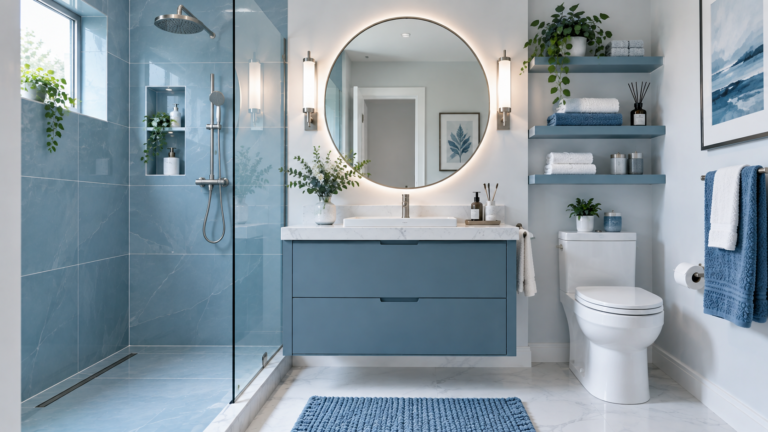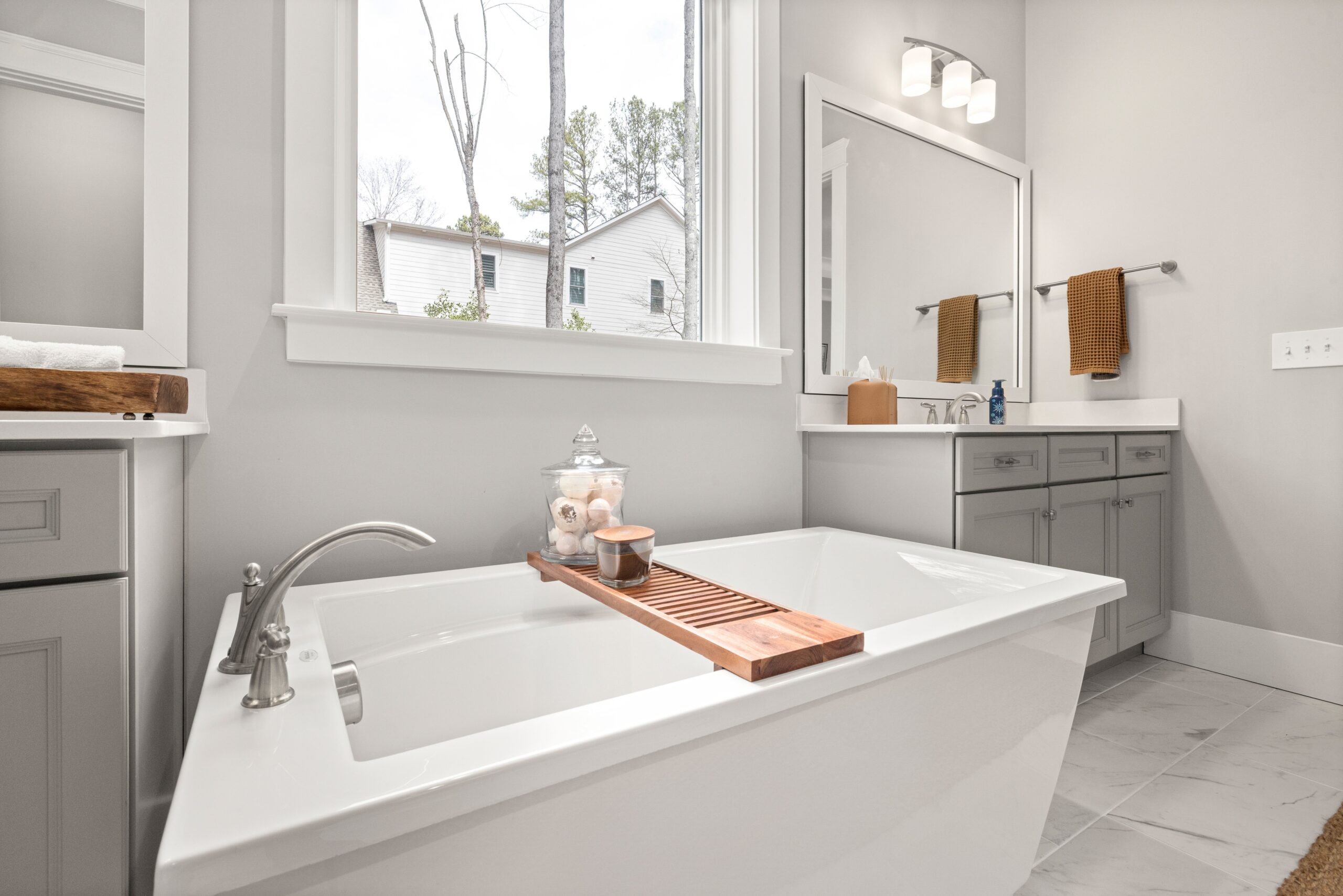
Why Your Bathroom Never Feels Like a Spa?
Okay, can we talk about something? A friend of mine just redid her entire bathroom — new tile, new vanity, the whole thing — and a few weeks later she texted me a photo with the caption “it looks exactly like the showroom… so why does it still feel like a regular bathroom?” And honestly? I knew exactly what she meant. Nothing was wrong with it. It just didn’t feel like anything. You walk in, you wash your face, you leave. Same as before, just shinier.
Here’s the thing I’ve learned after going down way too many spa-bathroom rabbit holes myself: it’s never really about the tile. It’s about whether the room makes your shoulders drop the second you walk in. We call this the “step-in test” at Bluvelle — does this room change how you feel the moment you’re in it, or does it just look nice for ten seconds before you forget you’re standing there? Most bathrooms fail that test even when they cost a fortune. So let’s fix that, one small thing at a time.
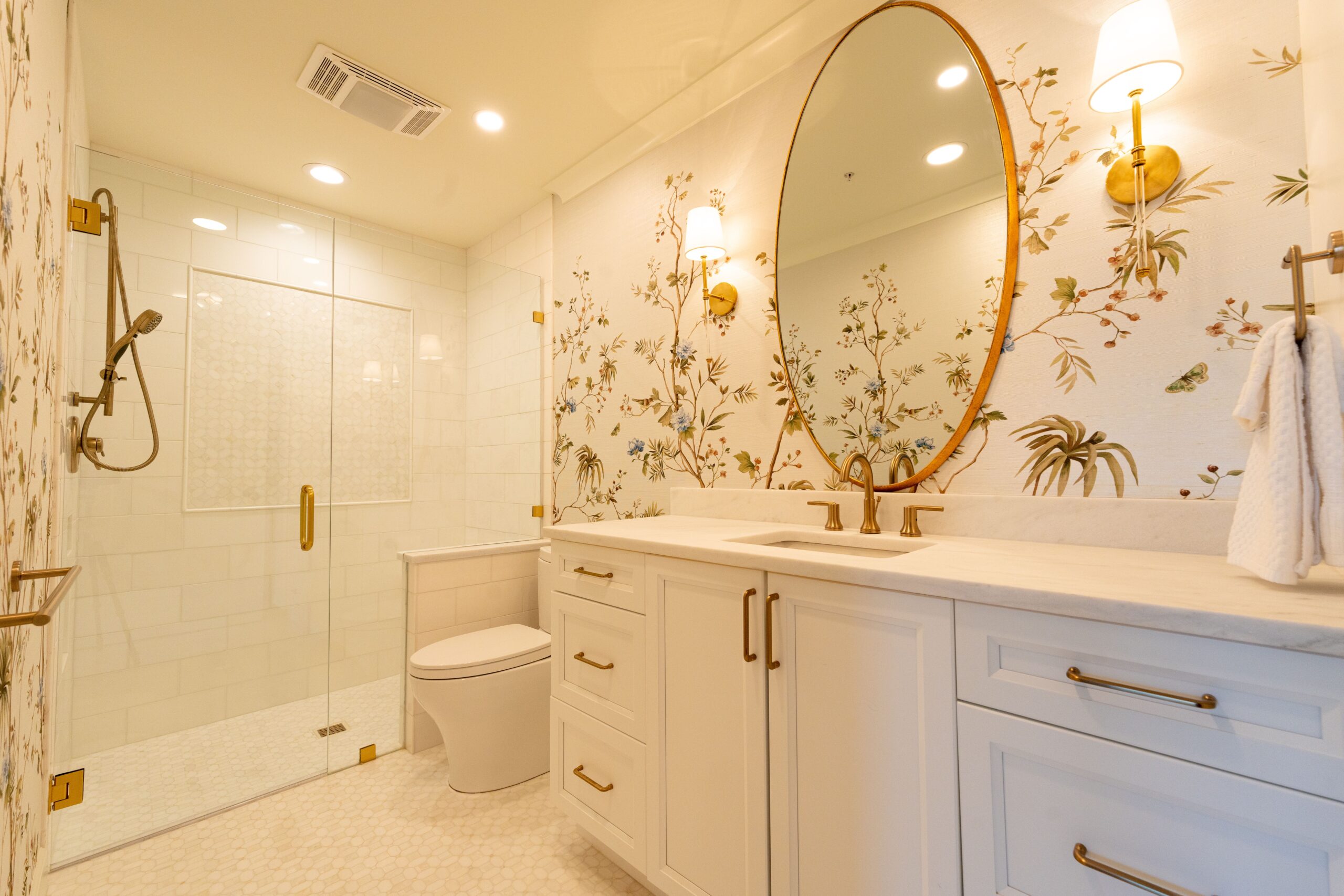
Your lighting is doing the opposite of what a spa’s does
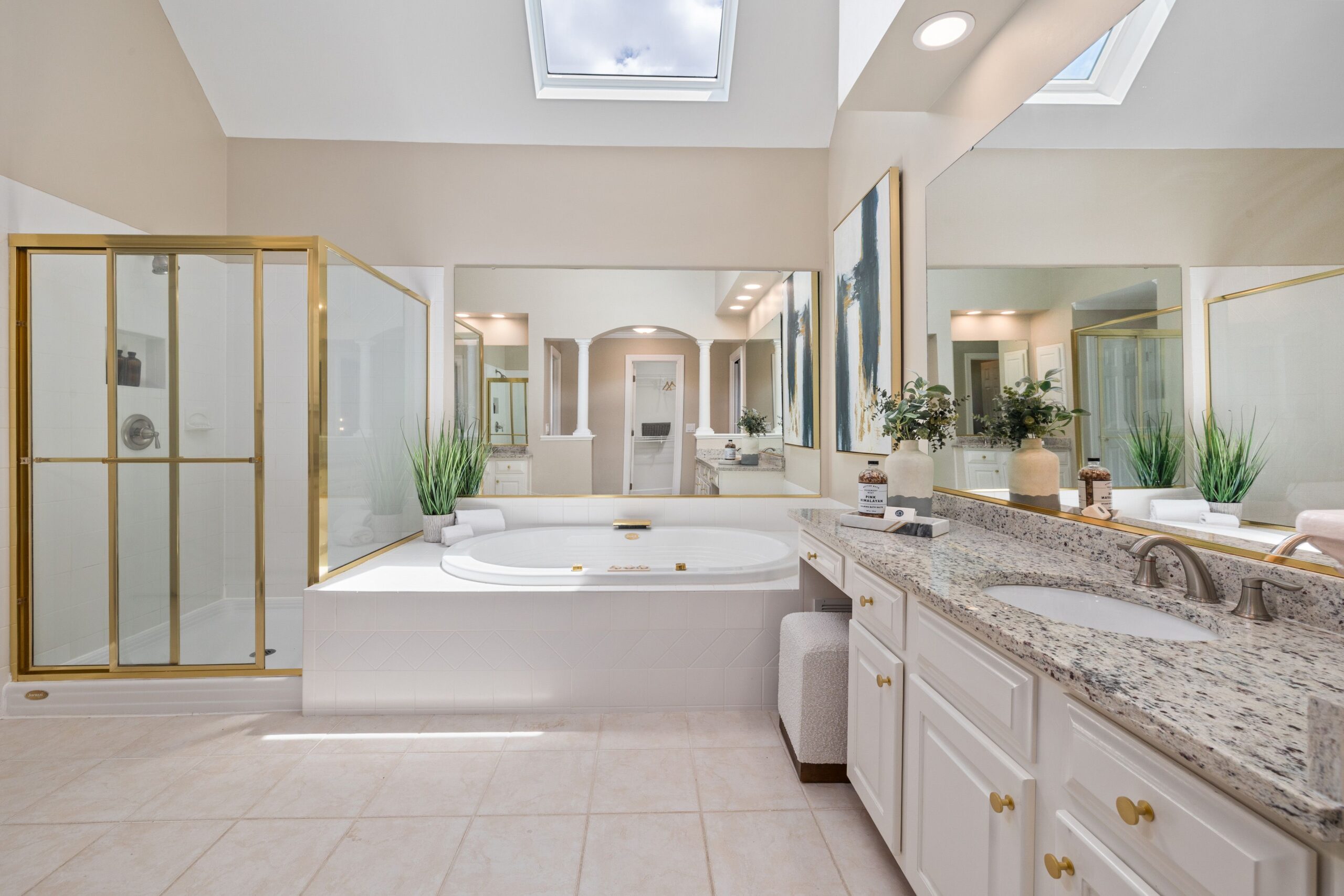
If there’s one change that moves the needle fastest, it’s this. Bright, cool overhead light is the single biggest spa-killer there is. It doesn’t matter how pretty your tile is — under that kind of light, everything reads like a hospital exam room. Designer Daniela Gottschalk swears by using a few different light sources you can control on their own, instead of one harsh fixture doing all the work, and honestly, once you try it you can’t go back.
Do this: swap in warm 2700K bulbs, and if you can swing it, add a second light source — a sconce by the mirror, something softer everywhere else. Designer Sophie Paterson uses exactly 2700K in her own projects for this reason. That little number is the whole difference between “spa” and “dentist’s office.”
Your countertop is talking too much
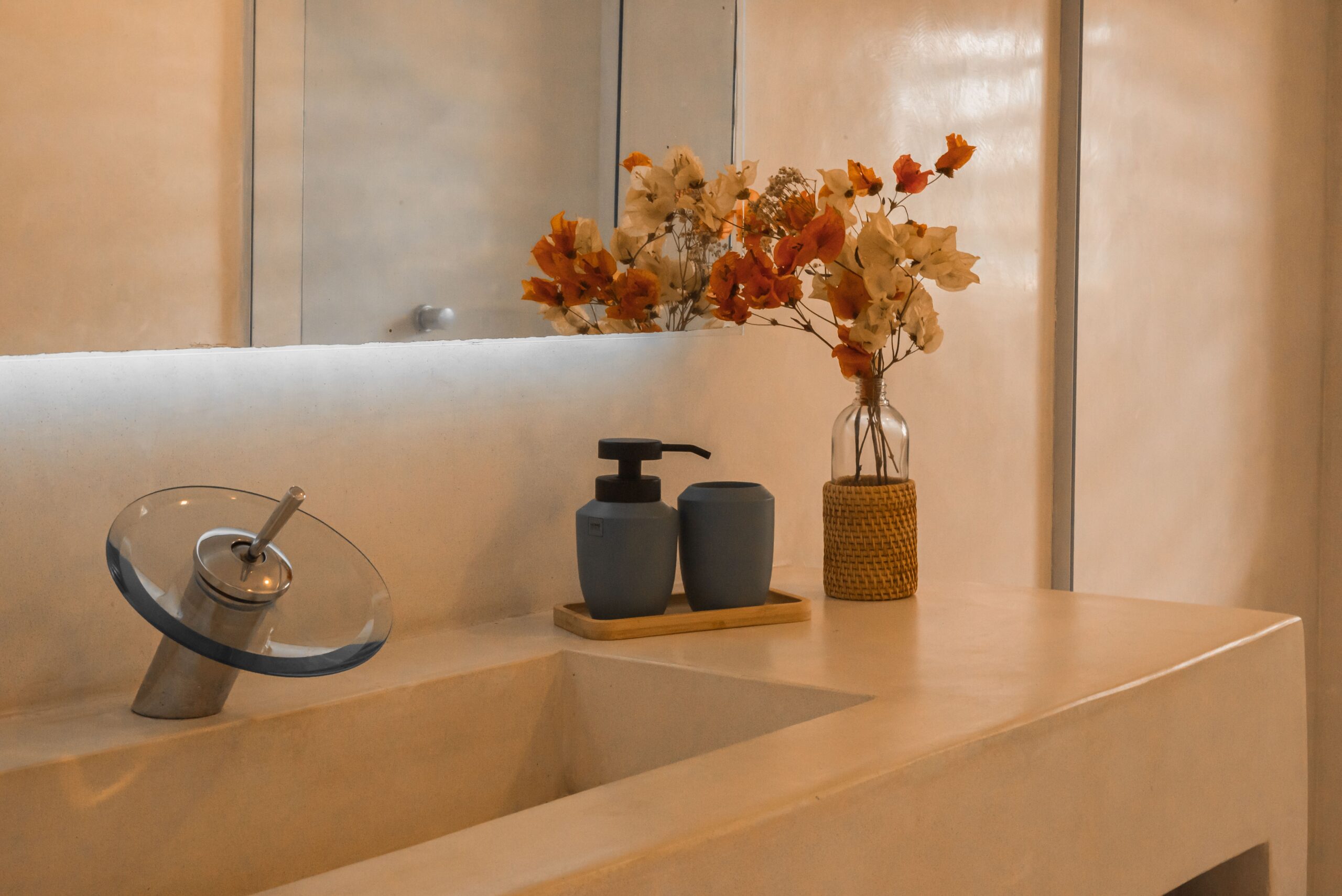
I say this with love, because mine used to look like this too: a spa counter is quiet on purpose, and ours almost never are, because life produces a LOT of bottles. One designer put it perfectly — your brain genuinely cannot relax when your eyes are scanning thirty different objects and labels at once. It’s not your fault. It’s just a lot of stuff.
Do this: clear the counter down to what you actually touch every single day. Everything else goes in a drawer. Be a little ruthless here — I promise you’ll use less than you think.
Your vanity isn’t the first thing you see
This is basically the bedroom “don’t sleep facing the door” trick, but for bathrooms, and it genuinely works. One designer’s rule of thumb: whatever’s directly in your line of sight when you walk in should be the vanity or the tub — not the toilet. Whatever greets you first sets the entire mood of the room, whether you’ve ever noticed it or not.
Do this: can’t move the plumbing? Fair. Pull focus instead — a plant, a piece of art, or better lighting aimed toward the vanity so your eye lands there first, not on the obvious thing.
Your bathroom has no visual focal point
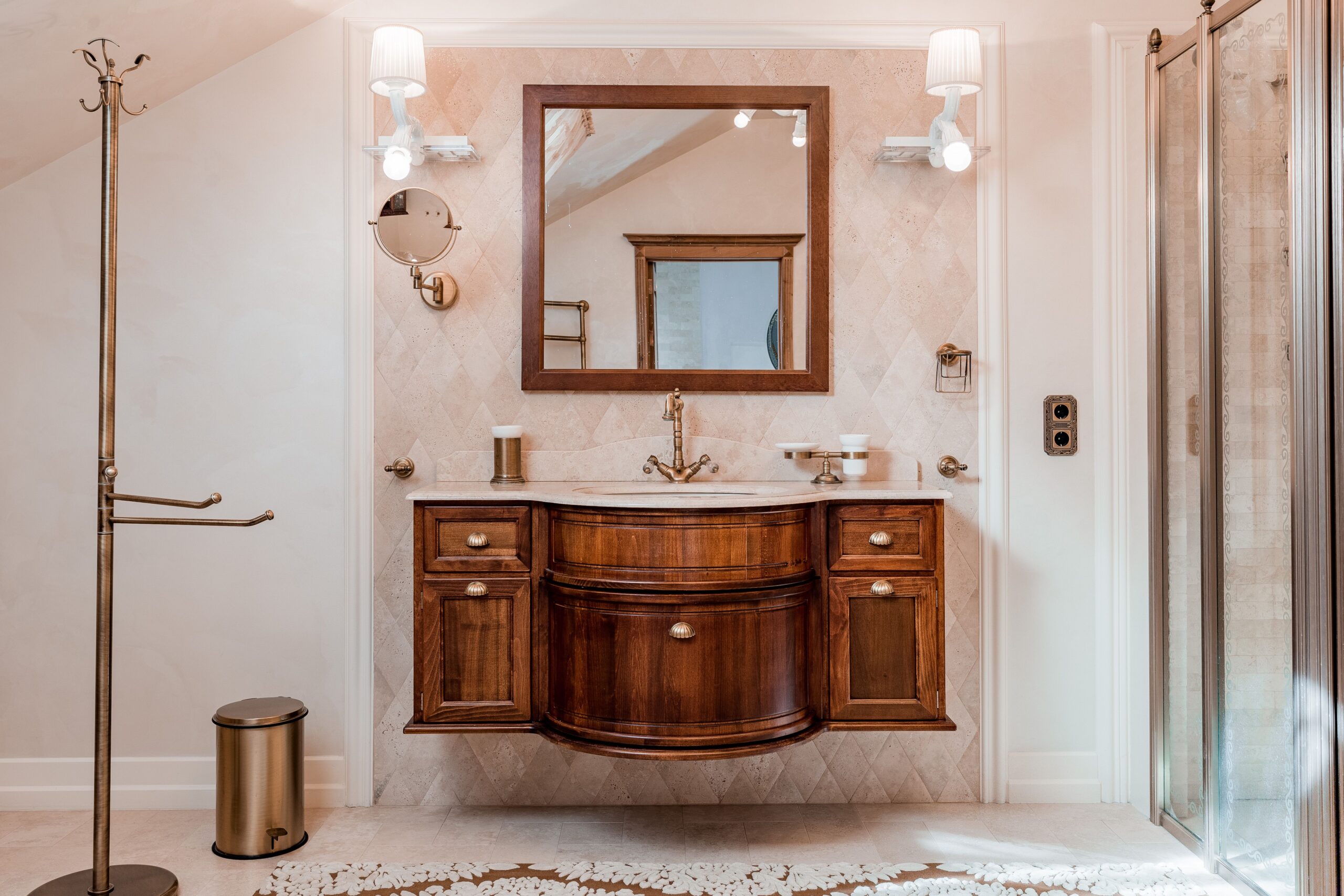
Here’s something most people never consciously notice: when you walk into a room, your eyes immediately look for somewhere to land. In a spa, that’s usually a beautiful vanity, a freestanding tub, a statement mirror, or even a carefully styled shelf. In a typical bathroom, your eye often lands on whatever happens to be most visible — a cluttered counter, a stack of products, or, unfortunately, the toilet.
The result isn’t necessarily that the room looks bad. It just feels forgettable. Designers often talk about creating a focal point because it gives a room a sense of intention. Without one, your eyes keep moving from object to object, which creates subtle visual noise even when the space is clean.
Do this: stand at the bathroom door and notice where your eyes go first. If it’s not the prettiest part of the room, create a focal point there. A larger mirror, a small piece of artwork, a plant, a beautiful tray, or even better lighting around the vanity can completely change how the room feels without changing the layout.
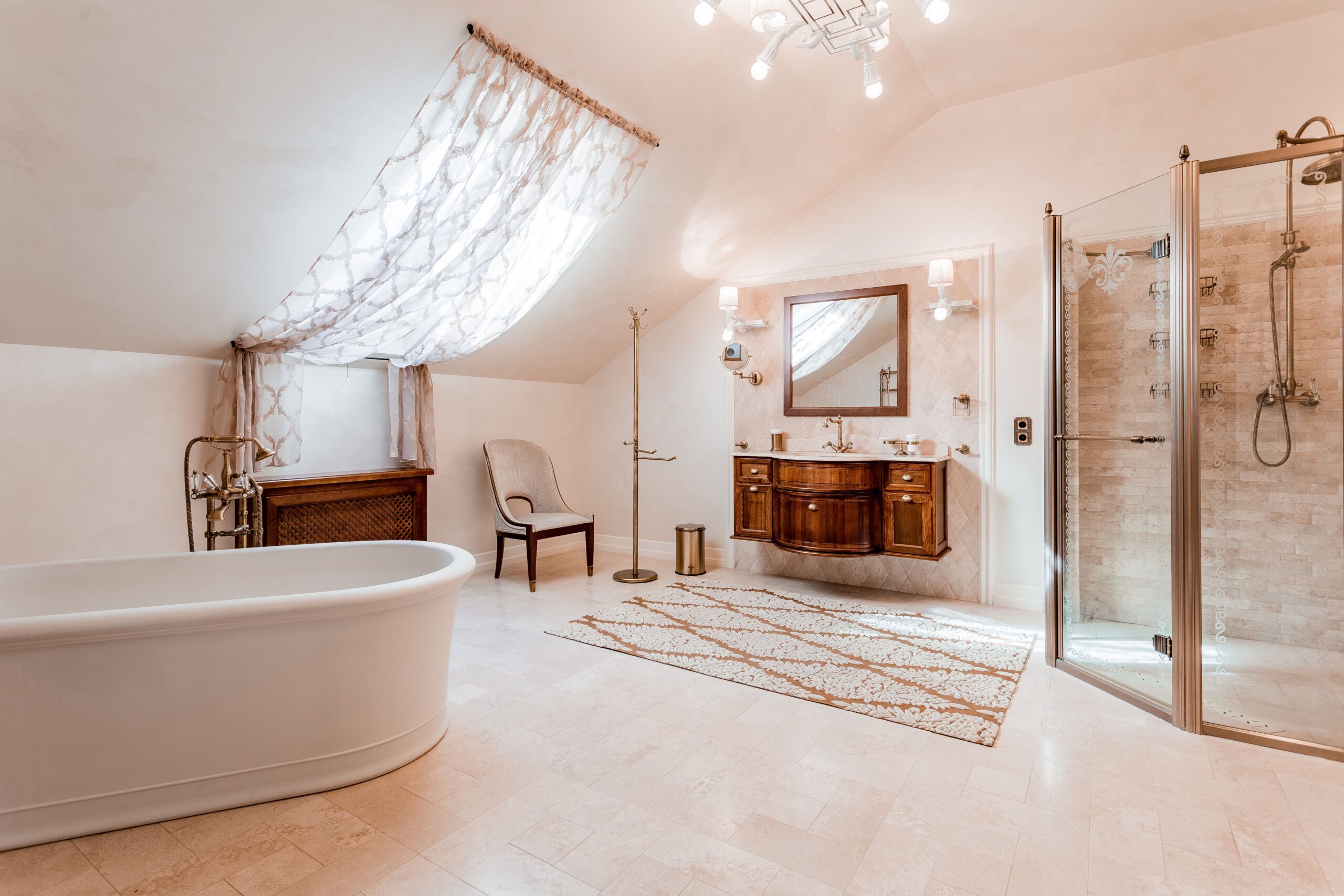
Your shower looks more like a CVS aisle than a retreat, and somehow your brain knows
Ever notice how luxury hotels never let product packaging become part of the decor?
This one’s small but it might be my favorite on the whole list. Mismatched shampoo, conditioner, and body wash — all different brands, different fonts, different colors — quietly turns your shower into a tiny drugstore aisle even when everything’s technically “organized.”
Do this: decant your most-used stuff into a few matching bottles. Doesn’t need to be fancy — even a basic set from Target does it. The sameness alone does most of the heavy lifting. Suddenly it looks curated instead of just collected.
There’s nothing soft to land on
The first thing your feet touch after a shower matters more than the tile ever will .A spa isn’t just something you look at, it’s something you feel — and a thin bath mat or rough towels quietly undercut every other nice thing in the room, even gorgeous tile.
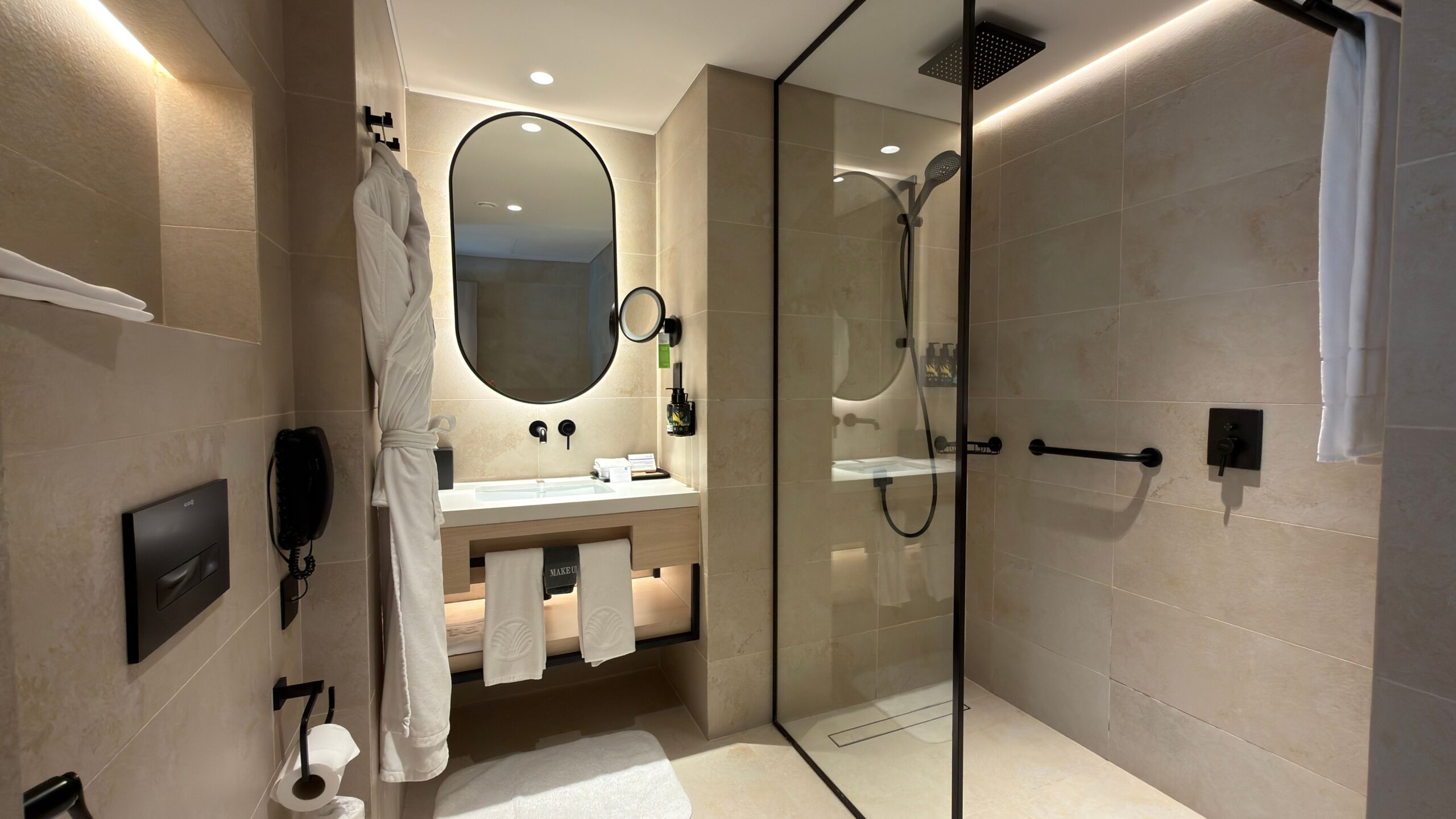
Do this: one genuinely plush bath mat, one upgraded set of towels. Go for warm neutrals — cream, sand, soft gray — they read more spa-like than stark white, somehow.
Nothing in here smells like anything
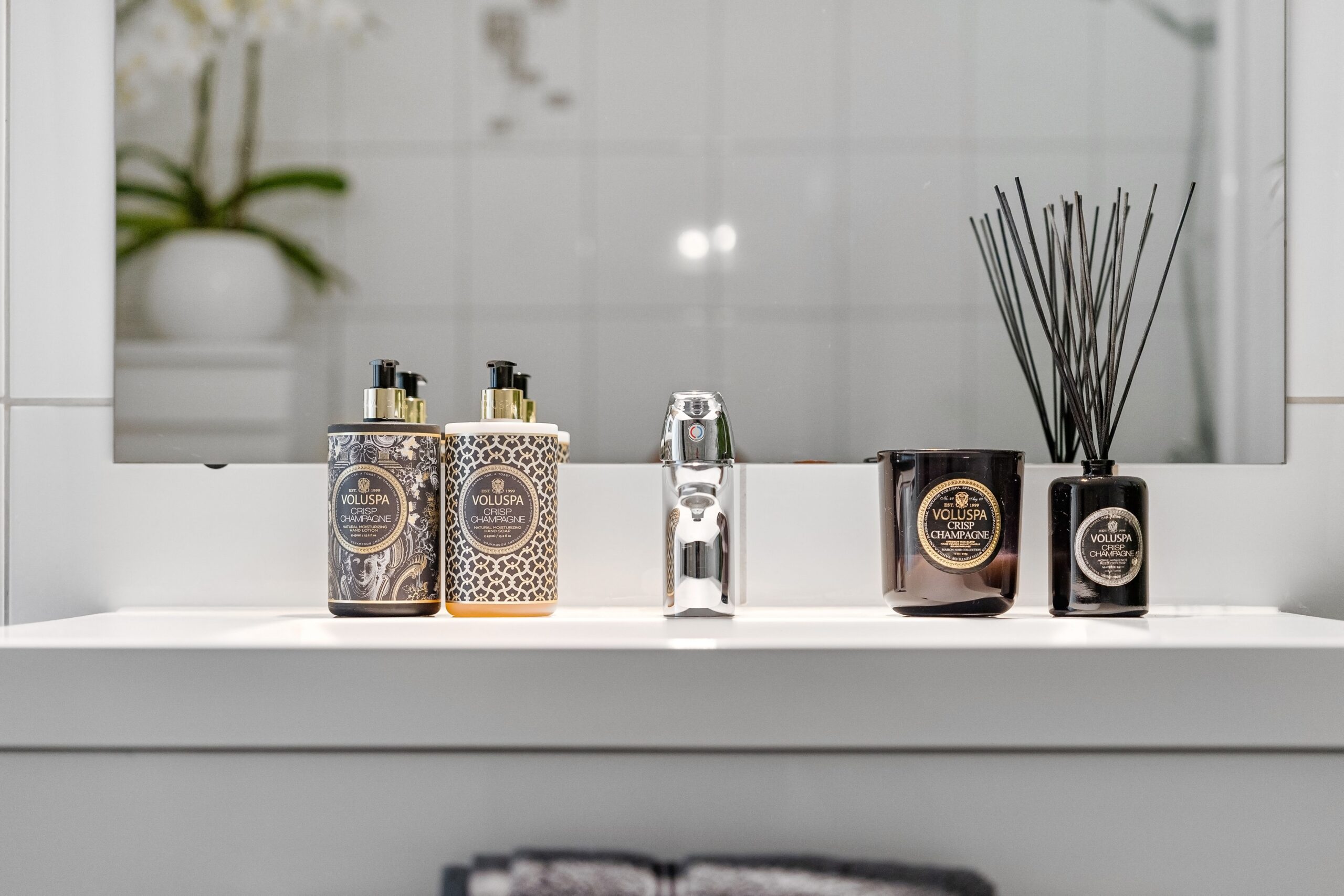
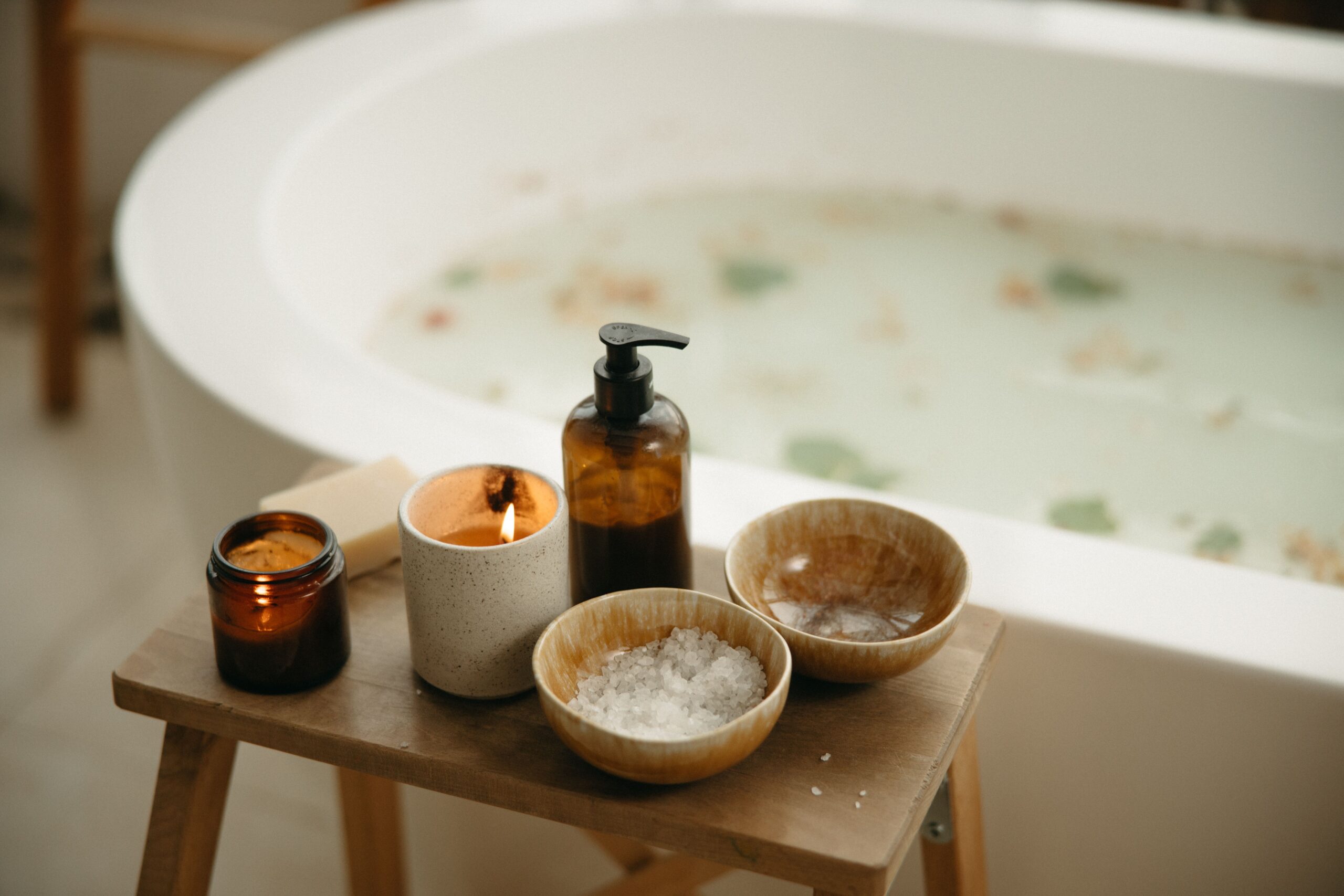
Most people choose scents the same way they choose candles: whatever smells good in the store. The problem is that a scent you enjoy for 30 seconds isn’t always one you want surrounding you every night and this is one of the the cheapest fix on the entire list and most people skip it completely. Smell is one of the fastest ways to shift a mood there is — it’s basically a shortcut to a different state of mind, not just a nice extra.
Do this: pick one scent — lavender, sandalwood, eucalyptus, whatever you actually love — and stick with it. A candle, a diffuser, even a simple linen spray. The consistency is what turns it into a cue your brain recognizes, not just a smell that happens to be there.
There’s no plant life in here, or the wrong kind
Nearly every luxury spa borrows from nature somewhere — stone, wood, water, greenery. Bathrooms without any natural element can feel strangely sterile, even when they’re beautiful. That’s why so many spa spaces feel calming before you’ve even noticed the details: there’s usually something alive in the room.
A bathroom with zero greenery just feels sterile, no matter how nice the tile is — but you genuinely don’t need a green thumb for this one. Ferns, peace lilies, and snake plants practically thrive in bathroom humidity. It’s one of the few times your terrible plant track record actually works in your favor.
Do this: one plant. Even a faux one if you’re like me and have personally ended the life of every houseplant you’ve ever owned. If counter space is tight, hang it instead — problem solved, zero surface used.
You’re saving the good robe and towels for guests
Okay, this is the one I really want you to sit with for a second: most people own a nicer set of towels, or a nice robe, and save it “for when someone visits” — while using the worn, mismatched stuff on themselves every single day. A spa never makes its actual guests use the bottom-shelf version of anything. That’s kind of the whole point of a spa.
Do this: use the nice towel tonight. Wear the robe you’ve been saving. If it’s good enough for a guest, it’s good enough for you — the person who’s actually in this bathroom every single day.
The room has no sound of its own
Spas are quiet, but quiet doesn’t mean silent — it usually means controlled. One stray phone notification and the whole calm thing evaporates instantly, no matter how nice everything else is.
Do this: leave your phone outside the bathroom during your routine, or put on something instrumental and low-key. The goal isn’t entertainment, it’s just removing the thing that keeps half your brain on alert instead of actually winding down.
You use this room, but you’ve never made it a ritual
Here’s the thing I think almost every bathroom article misses, and it’s honestly the whole point underneath everything above: a bathroom doesn’t feel like a spa just because the right objects are sitting in it. It feels like a spa when you treat what happens in it like a ritual instead of a race.
Brushing your teeth in ninety rushed seconds while scrolling your phone is not the same experience as doing the exact same task slowly, with the lights dimmed and a scent you actually chose — even though, technically, nothing in the room changed.
Do this: pick one part of your routine you already do every day — washing your face, your evening shower, whatever — and just do it five minutes slower tonight. Lights down, phone in the other room. See what shifts. That feeling is genuinely the whole point of every other tip on this list.
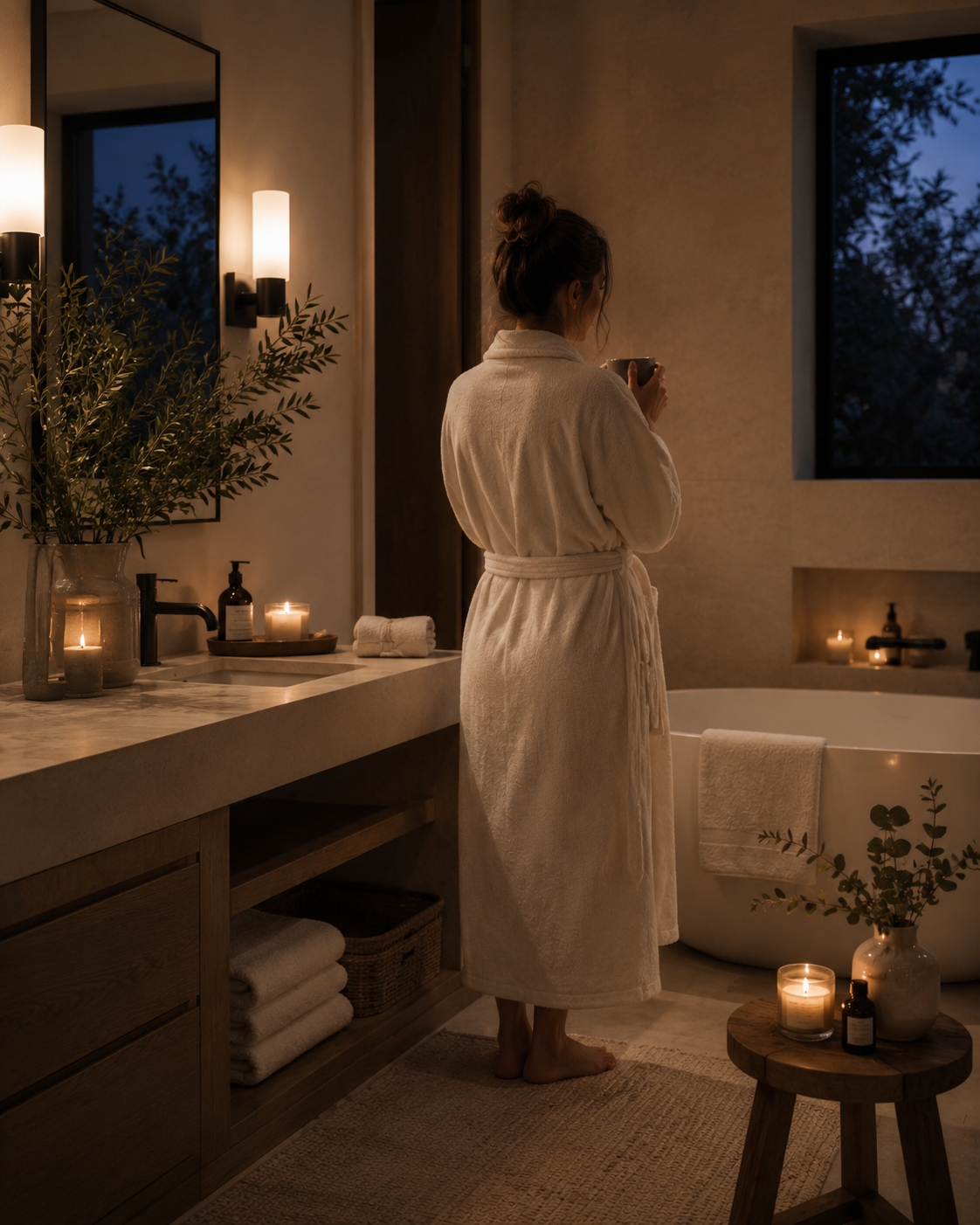
If you try only one thing this week, dim the lights, put your phone outside the door, and use the towel you’ve been saving for guests. Five minutes later, you’ll understand why spas aren’t really selling products — they’re selling permission to slow down.