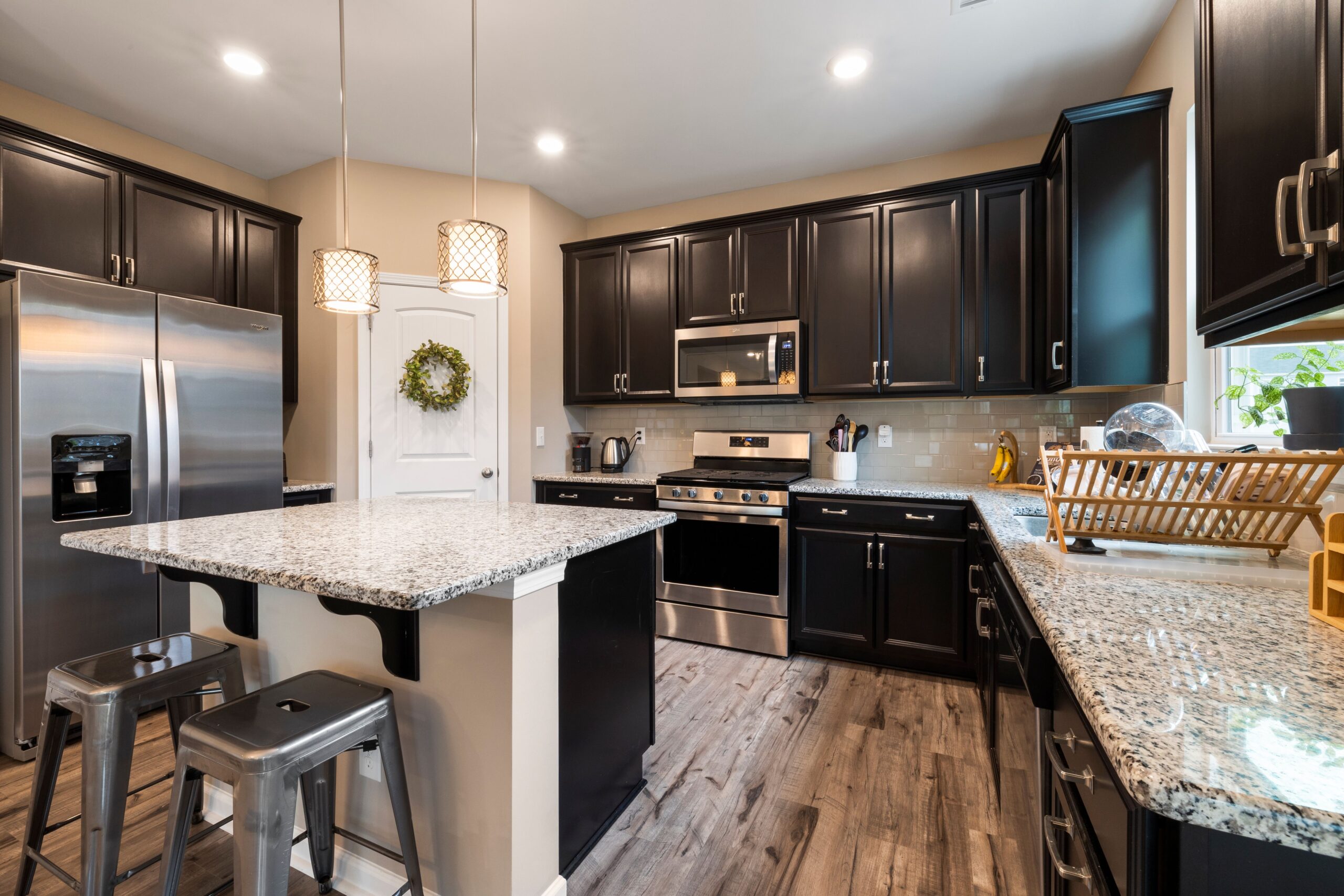
A few months ago, a friend texted me a photo of her kitchen at 9pm.
The counters were wiped. The dishes were done. The trash had been taken out. Technically, the room was clean.
Her message underneath the photo said:
“Why does this still look like a disaster zone?”
And honestly, I knew exactly what she meant.
Because most of us have stood in our kitchen after cleaning it and felt strangely dissatisfied. Nothing is dirty, but somehow the room still feels chaotic. Unfinished. Like it never fully settles down.
The mistake is assuming this means you’re messy.
Usually, it doesn’t.
A kitchen that always looks cluttered is rarely suffering from one big problem. It’s usually ten or eleven tiny things that quietly create visual noise every day.
At Bluvelle, we’ve gone through the same frustration ourselves, and after looking at countless kitchens—from tiny apartments to large family homes—we’ve noticed something surprising:
The kitchens that feel calm aren’t necessarily cleaner.
They’re simply designed to recover faster from everyday life.
Here’s what might actually be keeping your kitchen stuck in permanent “almost clean” mode.
Your appliances are stealing the space your eyes need
Most kitchens aren’t short on appliances.
They’re short on breathing room.
The toaster. The coffee maker. The air fryer. The blender. Individually they don’t seem like much.
Together they slowly eat the exact surface area your brain wants to see when it scans a room.
That’s why a counter can be spotless and still feel crowded.
Many designers point out that visible appliances create visual weight, even when they’re neatly arranged.
Fix it: Create one dedicated appliance zone. If something genuinely gets used every day, let it stay out—but keep it grouped together instead of scattered around the kitchen.
Your dish rack is counting as clutter
This one catches people off guard.
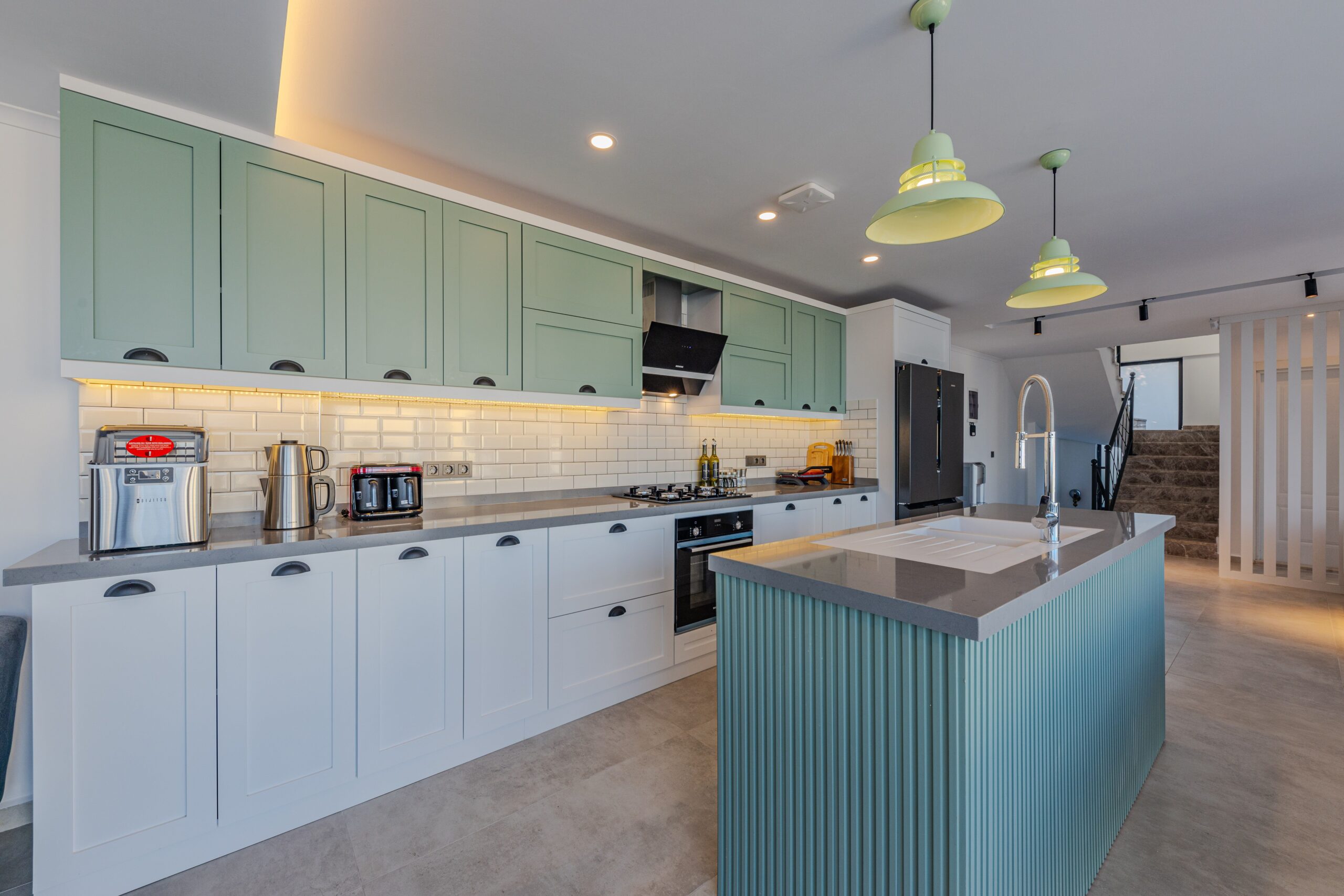
A dish rack filled with freshly cleaned dishes still reads as unfinished work.
Your brain doesn’t distinguish between dishes waiting to be washed and dishes waiting to be put away.
It simply sees a task that isn’t complete.
Which means every time you walk into the kitchen, you’re being reminded of something left unfinished.
Fix it: Put dishes away the same day whenever possible. If counter space is limited, consider a collapsible drying rack that can disappear when it’s not in use.
Your kitchen wasn’t organized around your actual habits
Most organizing systems assume everyone uses their kitchen the same way.
They don’t.
One household constantly makes coffee.
Another bakes.
Someone else works from the kitchen island three days a week.
Yet many kitchens are organized around an imaginary “average person.”
That’s where clutter starts.
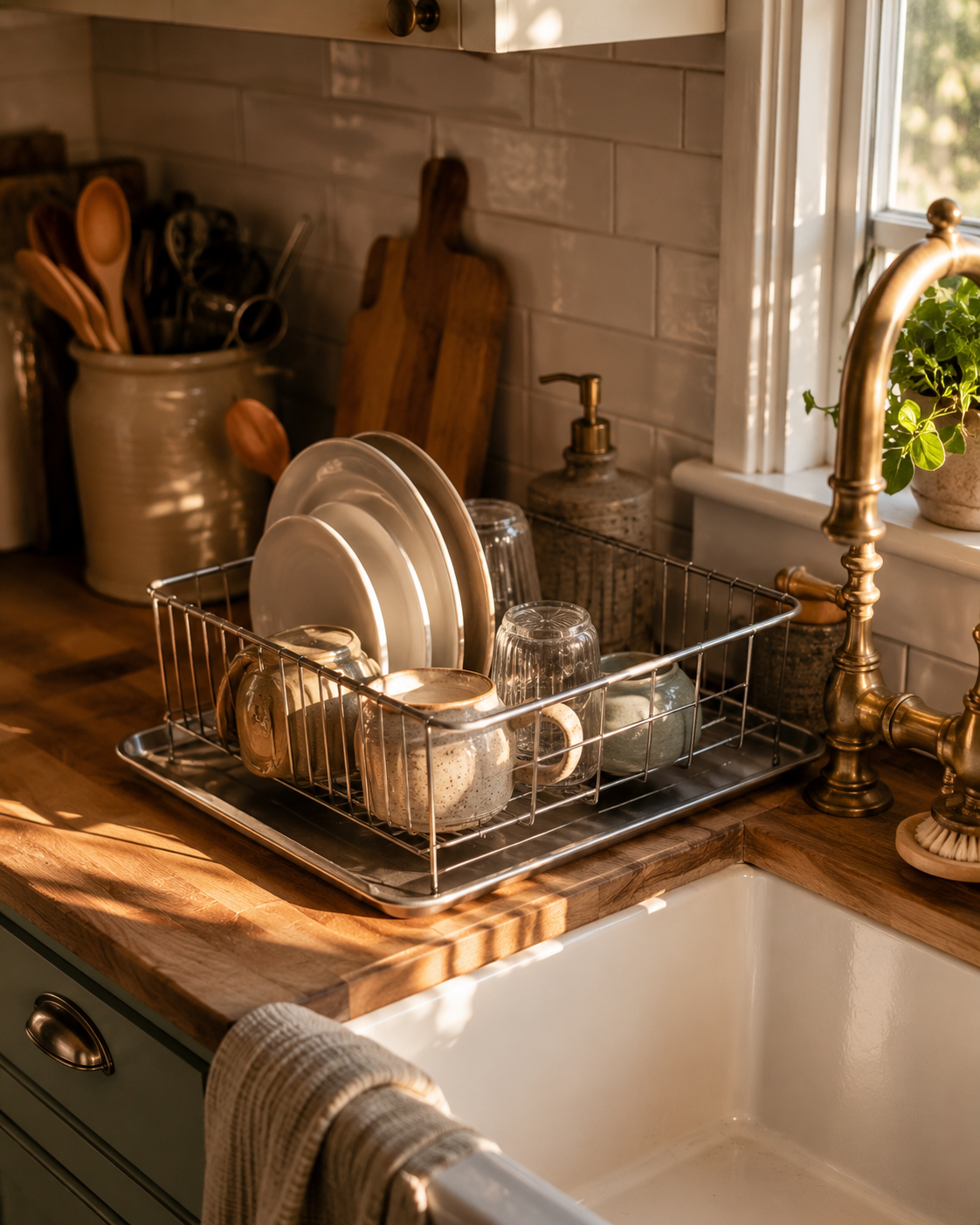
Because anything that doesn’t fit the system ends up living on the counter.
Fix it: Look for the items that repeatedly get left out. Instead of fighting the habit, create a home that supports it.
Your kitchen became the house’s drop zone
Keys.
Mail.
Receipts.
Sunglasses.
Packages.
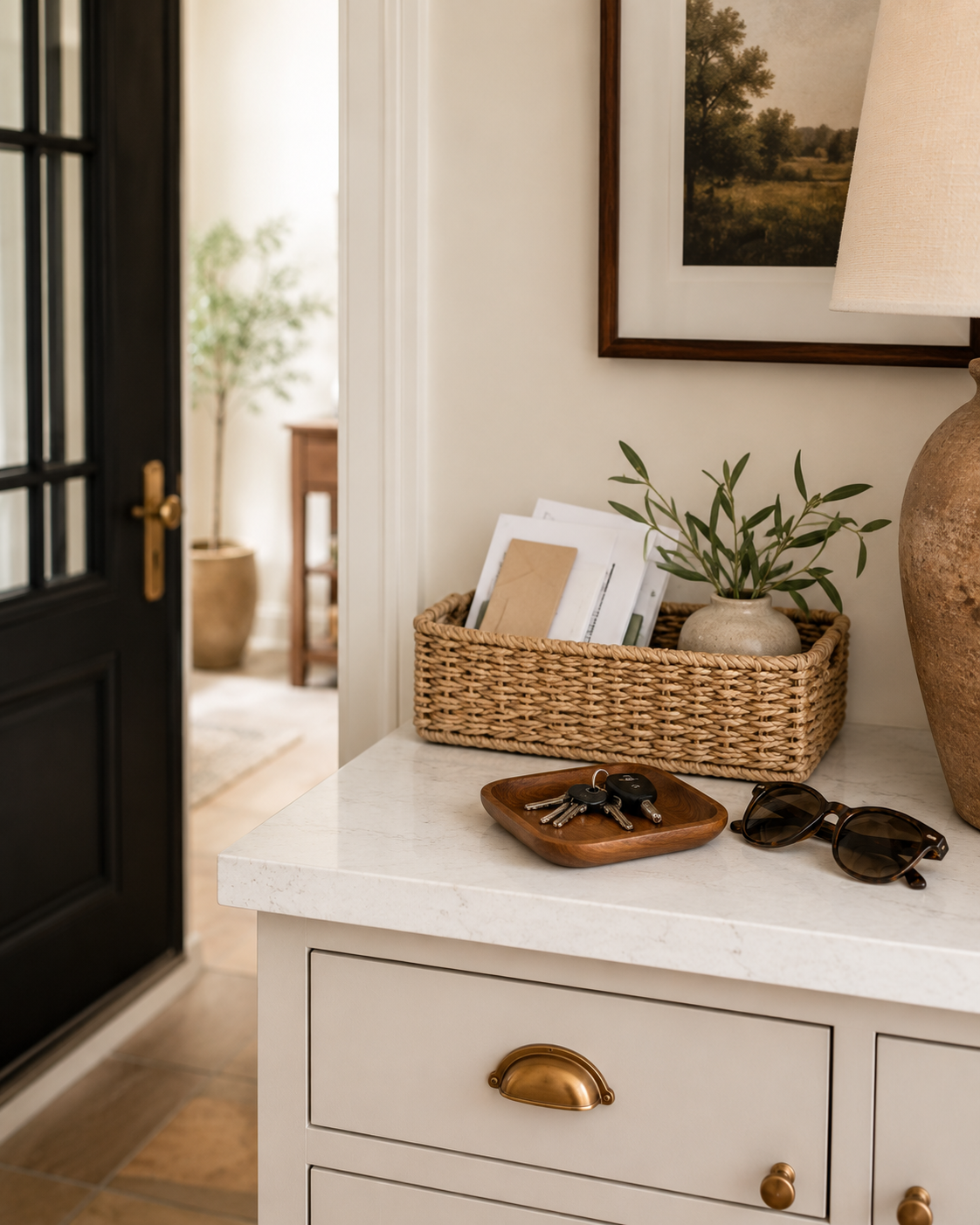
If your kitchen sits between the front door and the rest of the home, it often becomes a temporary landing strip for everything entering the house.
The problem is that “temporary” slowly becomes permanent.
Fix it: Create a dedicated landing zone near the entry. A tray, basket, or wall hook is often enough to stop random objects from migrating onto kitchen counters.
Open shelves are showing too much life
Open shelving photographs beautifully.
Real life is less cooperative.
What starts as a display of beautiful bowls and cookbooks slowly collects random mugs, spare spices, half-used candles, and things that don’t belong there.
The result isn’t physical clutter.
It’s visual clutter.
And visual clutter feels exhausting faster than actual clutter.
Fix it: Treat open shelves like display space, not storage space. If you wouldn’t intentionally style an item there, it probably belongs behind a cabinet door.

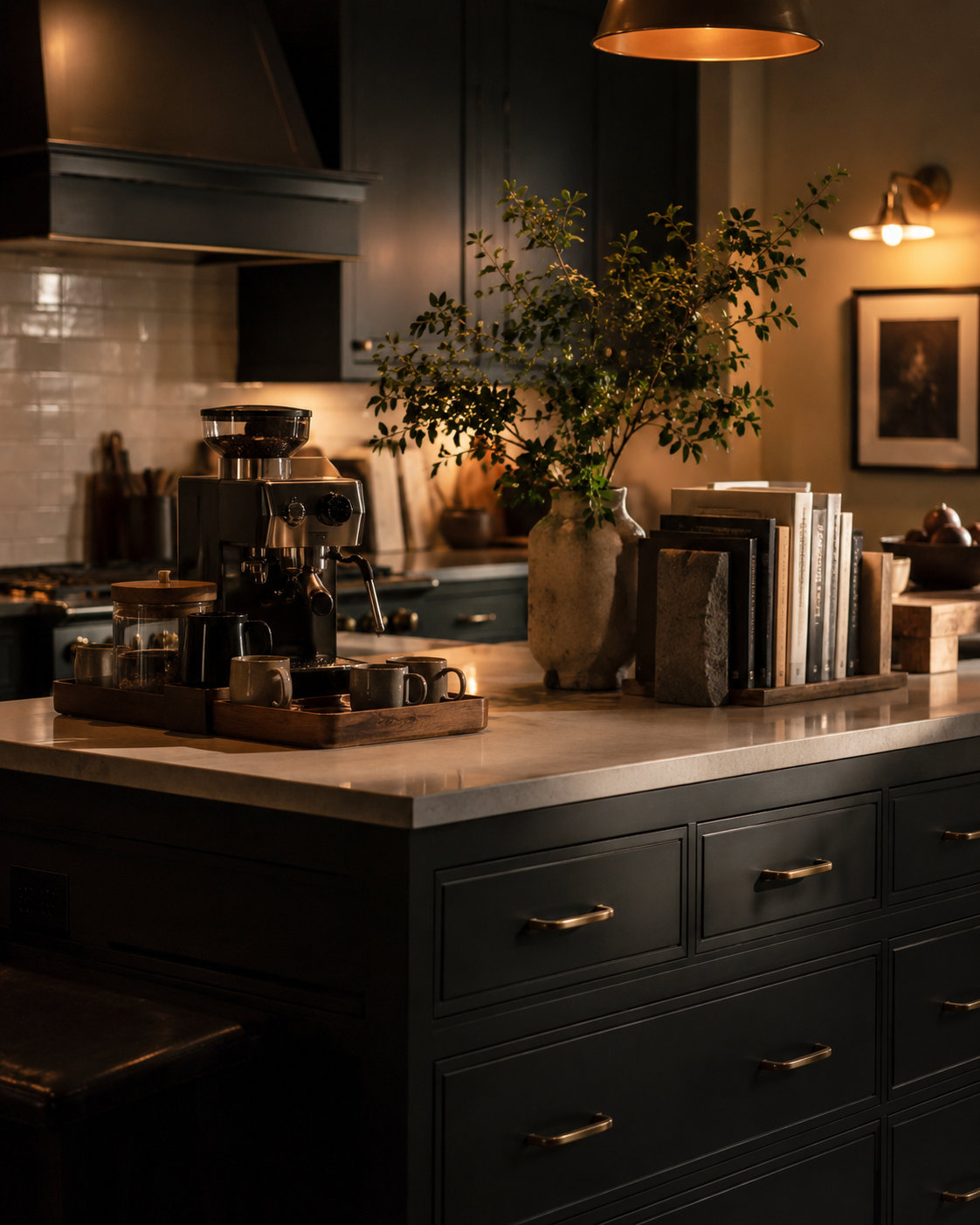
Your coffee station has no boundaries
Every kitchen has one hotspot.
Usually it’s where coffee happens.
It’s also where spoons, sugar packets, receipts, and random clutter mysteriously gather.
Not because you’re disorganized.
Because busy routines create mess where activity happens.
Fix it: Put the entire coffee setup on a tray. One visual boundary instantly makes the area feel intentional instead of scattered.
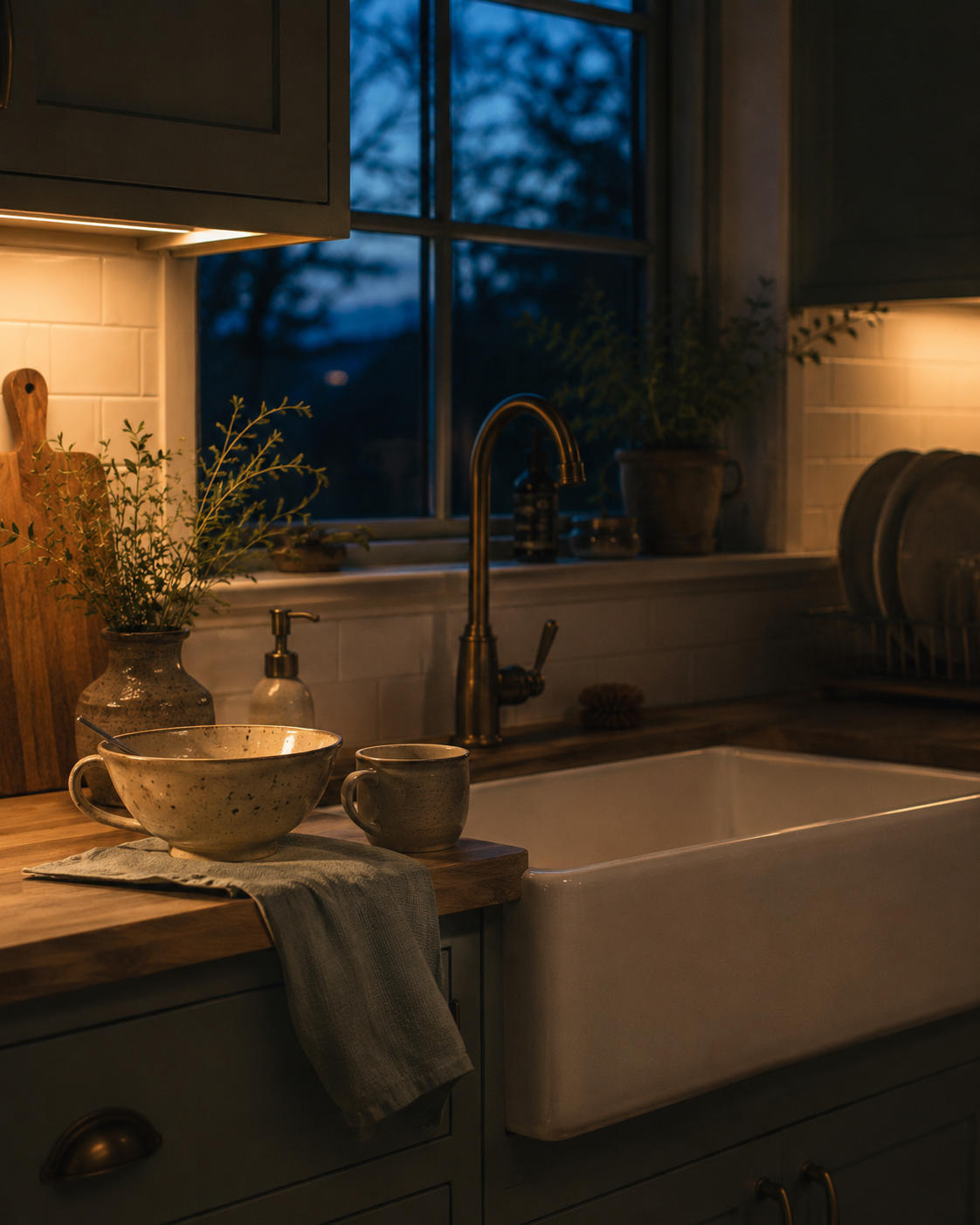
Your sink became your brain’s escape hatch
This might be the biggest one on the list.
After dinner, when you’re tired and mentally done with the day, the sink becomes a place to postpone decisions.
Just one plate.
One pan.
One glass.
Then suddenly it’s tomorrow morning.
Researchers studying household stress have repeatedly found that visible clutter can affect how people experience their homes emotionally—not because the mess itself is huge, but because unfinished tasks stay visible.
The sink is often the most visible unfinished task in the entire kitchen.
Fix it: Try the one-minute rule. If something takes less than a minute to rinse or load into the dishwasher, do it immediately.
Tiny action.
Massive difference.
Your kitchen has too much visual noise
This is different from clutter.
And it’s why many organized kitchens still feel messy.
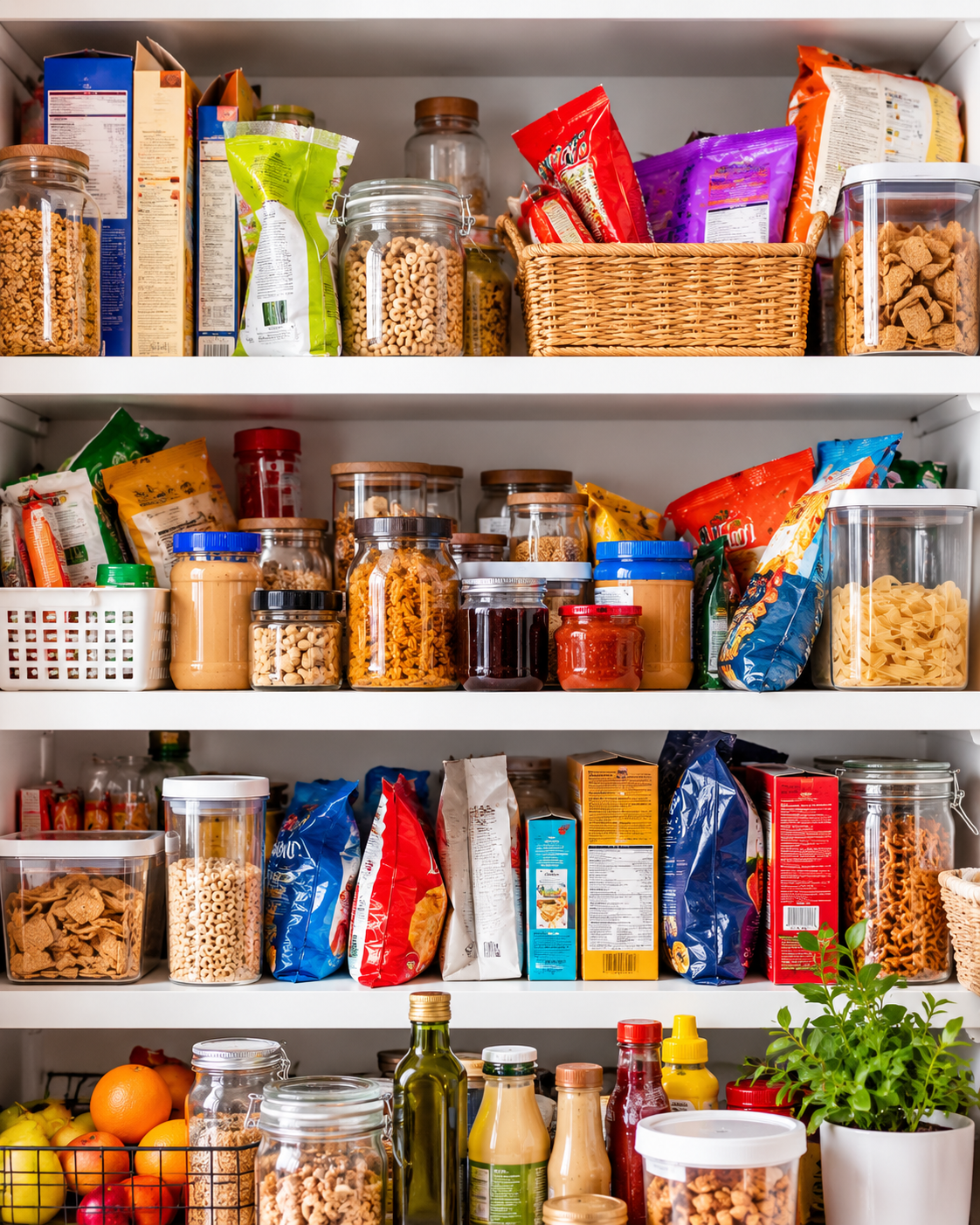
Bright food packaging.
Mismatched containers.
Random labels.
Different colors competing for attention.
Nothing is technically out of place.
But everything is demanding attention.
Your brain gets tired before you even realize why.
Fix it: Move frequently used dry goods into matching containers. You don’t need an Instagram pantry. Even a few coordinated containers dramatically reduce visual noise.
Nobody designed a spot for your pet
Pet bowls, food bags, and that one chewed-up toy almost always end up shoved into whatever corner is closest to the door — and it shows. Designers note pets are one of the most overlooked “mess creators” in any kitchen.
Fix it: give pet items one specific spot, even just a small mat near a back entrance, so the mess stays contained instead of spreading across your floor.
The “almost clean” items are fooling you
A stained apron.
A dish towel that’s technically usable.
Napkins that should’ve been washed three days ago.
These aren’t major messes.
But they quietly make a room feel neglected.
The kitchen doesn’t feel dirty.
It feels unfinished.
And unfinished is often what people mean when they say a room feels messy.
Fix it: Rotate dish towels, napkins, and aprons more often than you think you need to. Fresh textiles make a surprisingly large visual difference.
You’re fighting your kitchen instead of redesigning it
Here’s the part most organizing articles skip.
If the exact same spot becomes messy every single week, despite your best efforts, that area probably isn’t failing because of you.
It’s failing because the system doesn’t match reality.
Builders design kitchens.
Families create habits.
Those two things don’t always align.
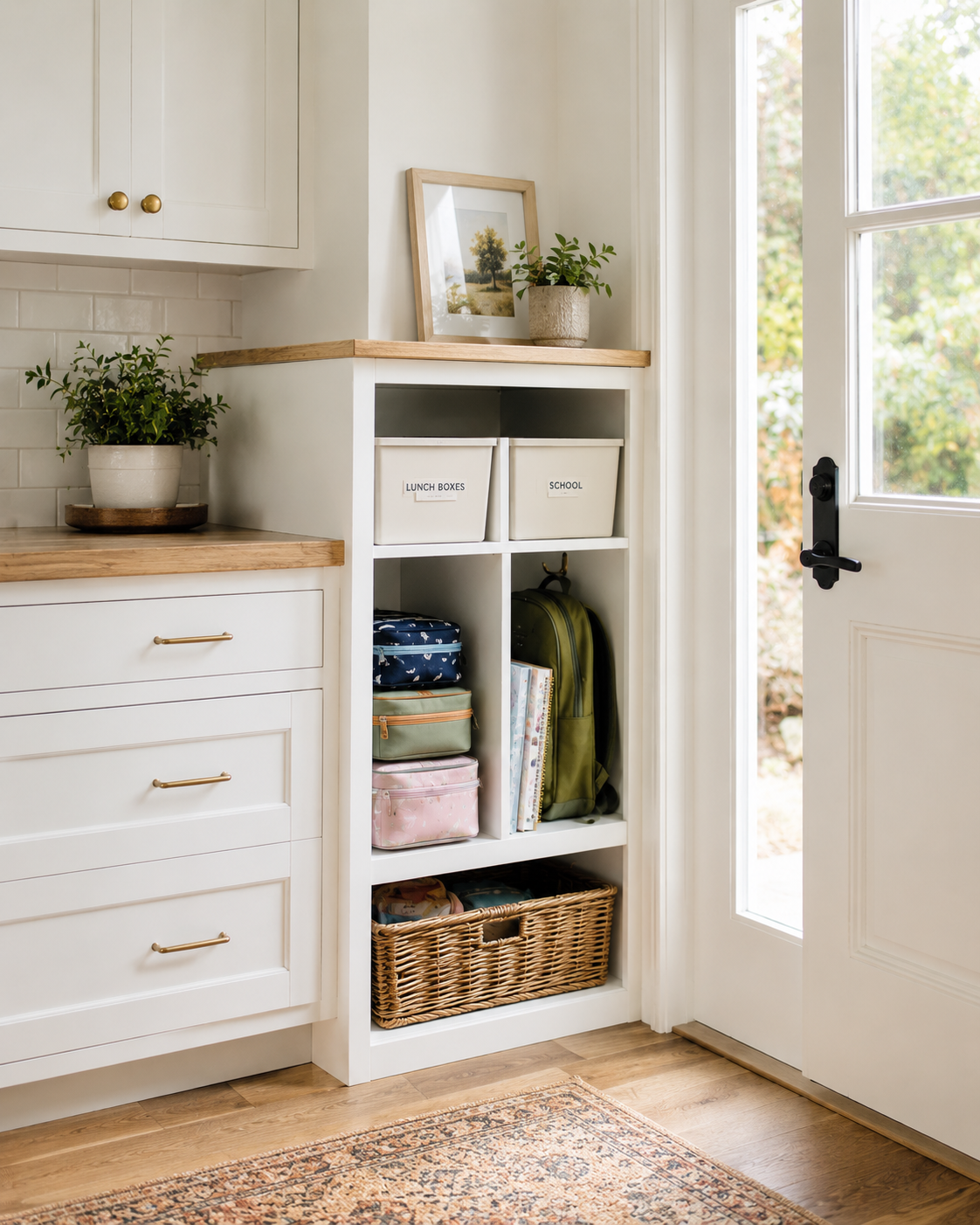
The corner where lunch boxes pile up.
The drawer that never closes properly.
The countertop where everything lands.
Those are clues.
Not personal failures.
Fix it: Pick the one spot that frustrates you most and redesign it around what actually happens there—not what you think should happen there.
Sometimes solving one problem corner changes the entire feeling of the room.
Here’s something worth remembering:
The calmest kitchens aren’t the ones that stay spotless.
They’re the ones that recover quickly.
The ones where everyday mess has somewhere to go.
The ones where the room resets itself instead of demanding a complete cleanup every night.
That’s really the philosophy behind every home we try to create at Bluvelle.
A kitchen doesn’t feel peaceful because it’s perfect.
It feels peaceful because the same three frustrations aren’t waiting for you every single morning.